Natasha Botelho Cook
Enter
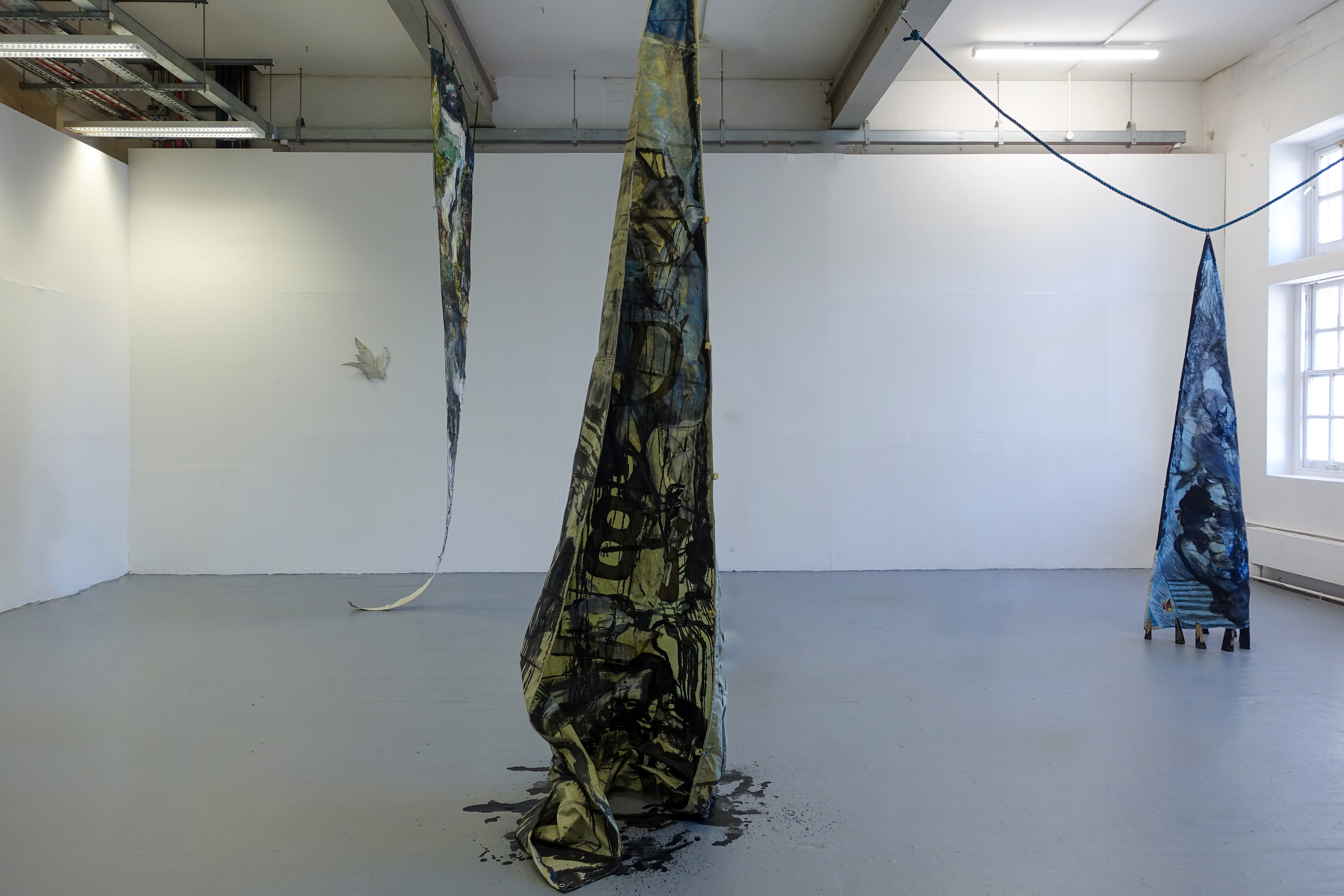
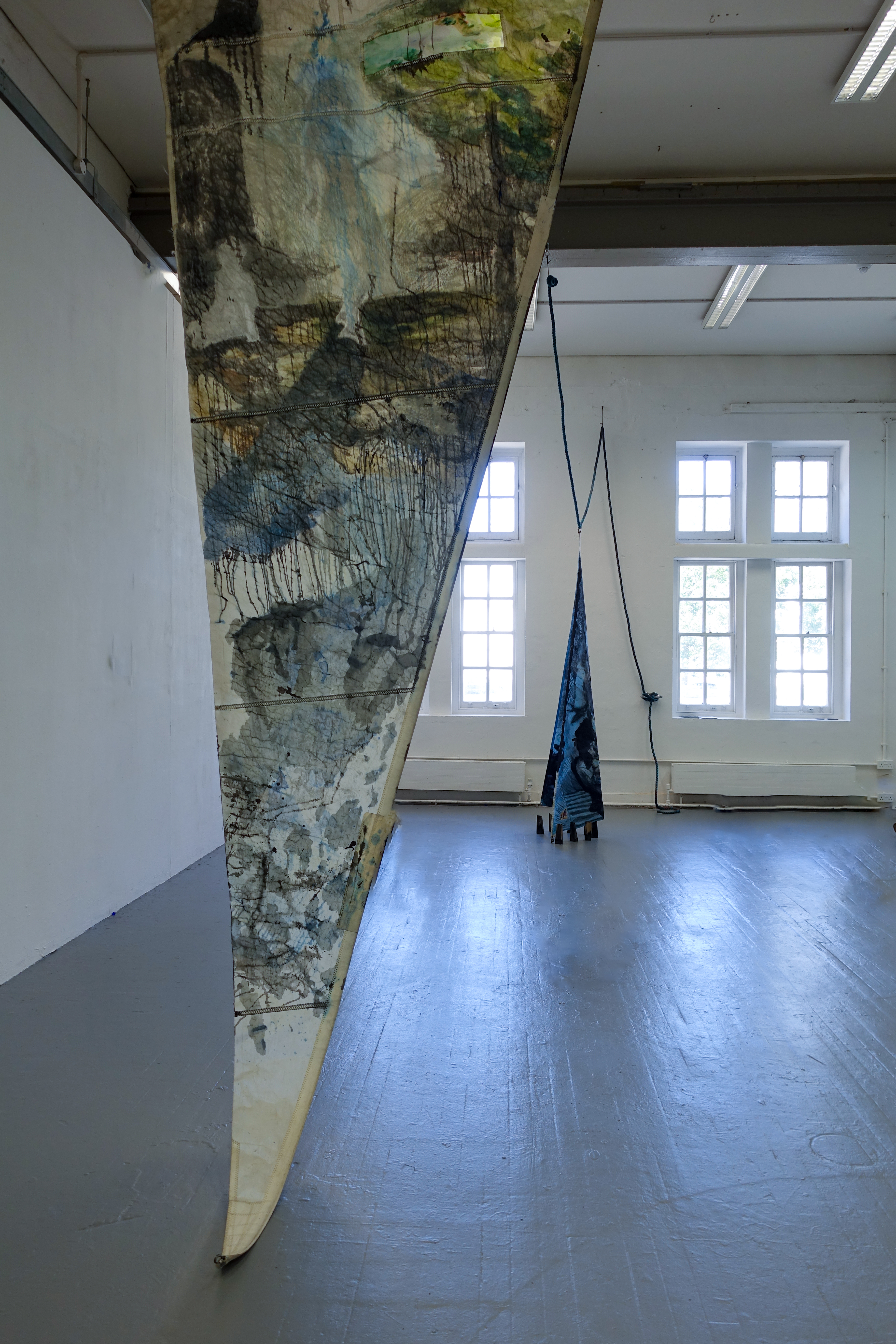
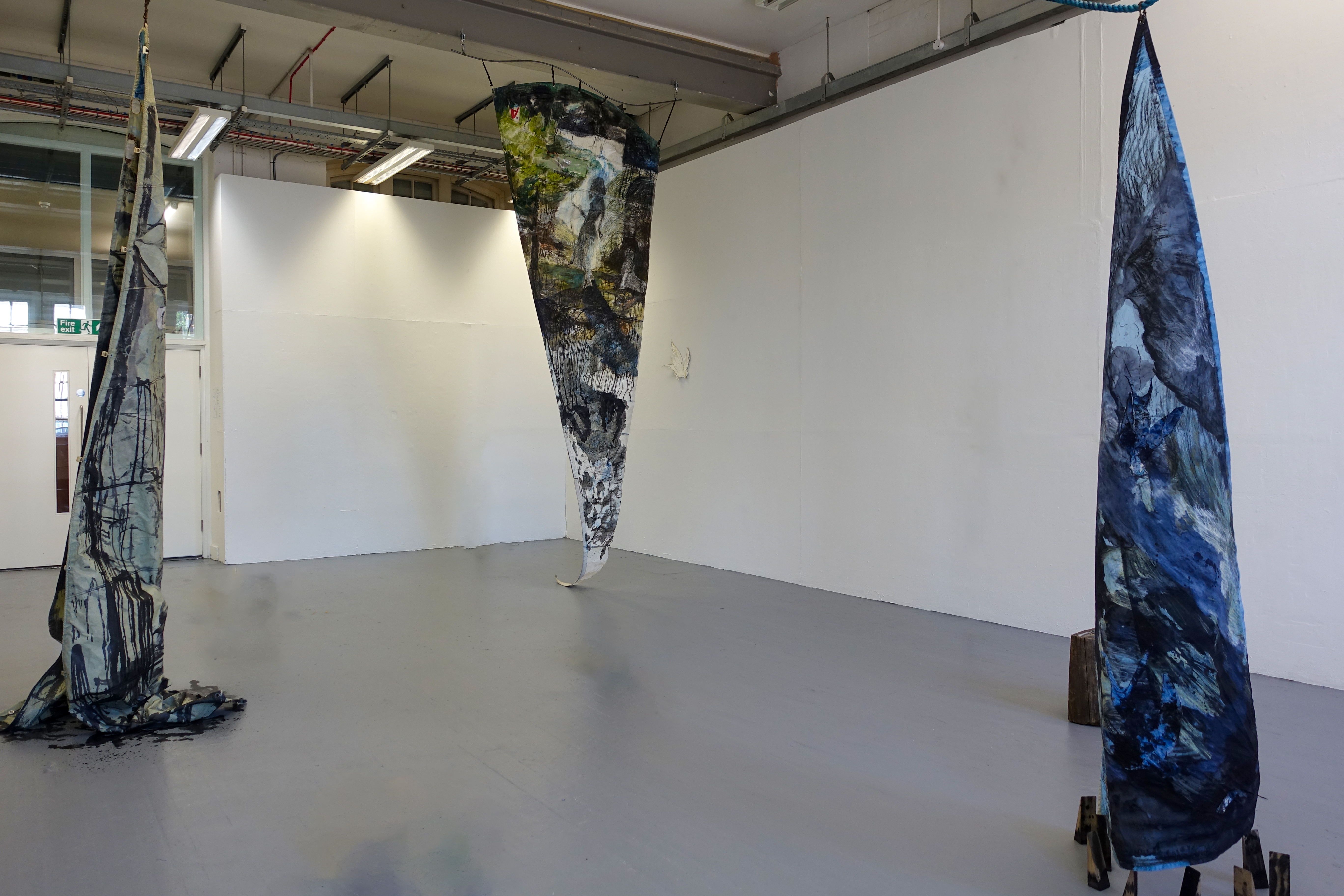 Installation view · Viva, Triangle Space, Chelsea College of Arts, 2026
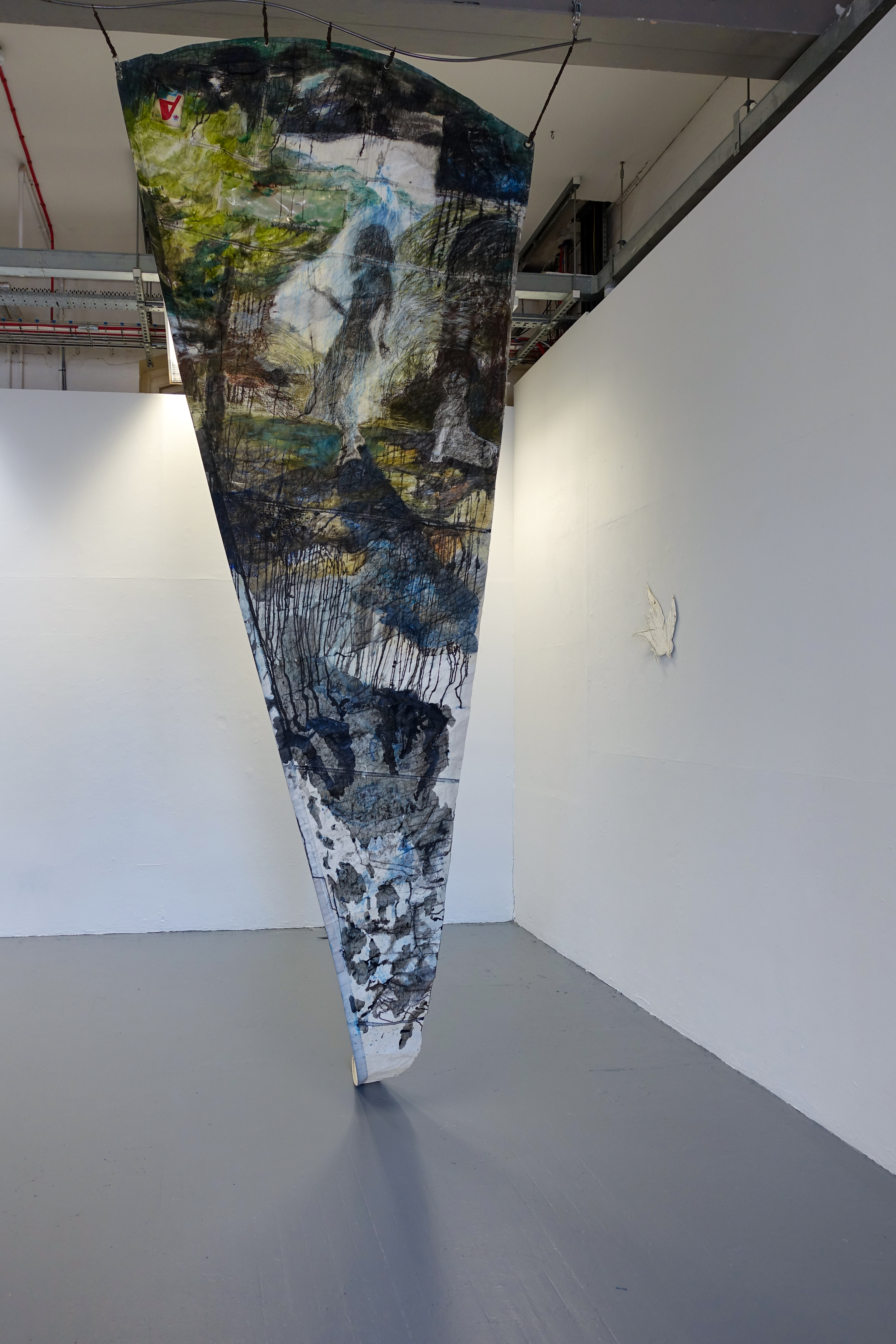
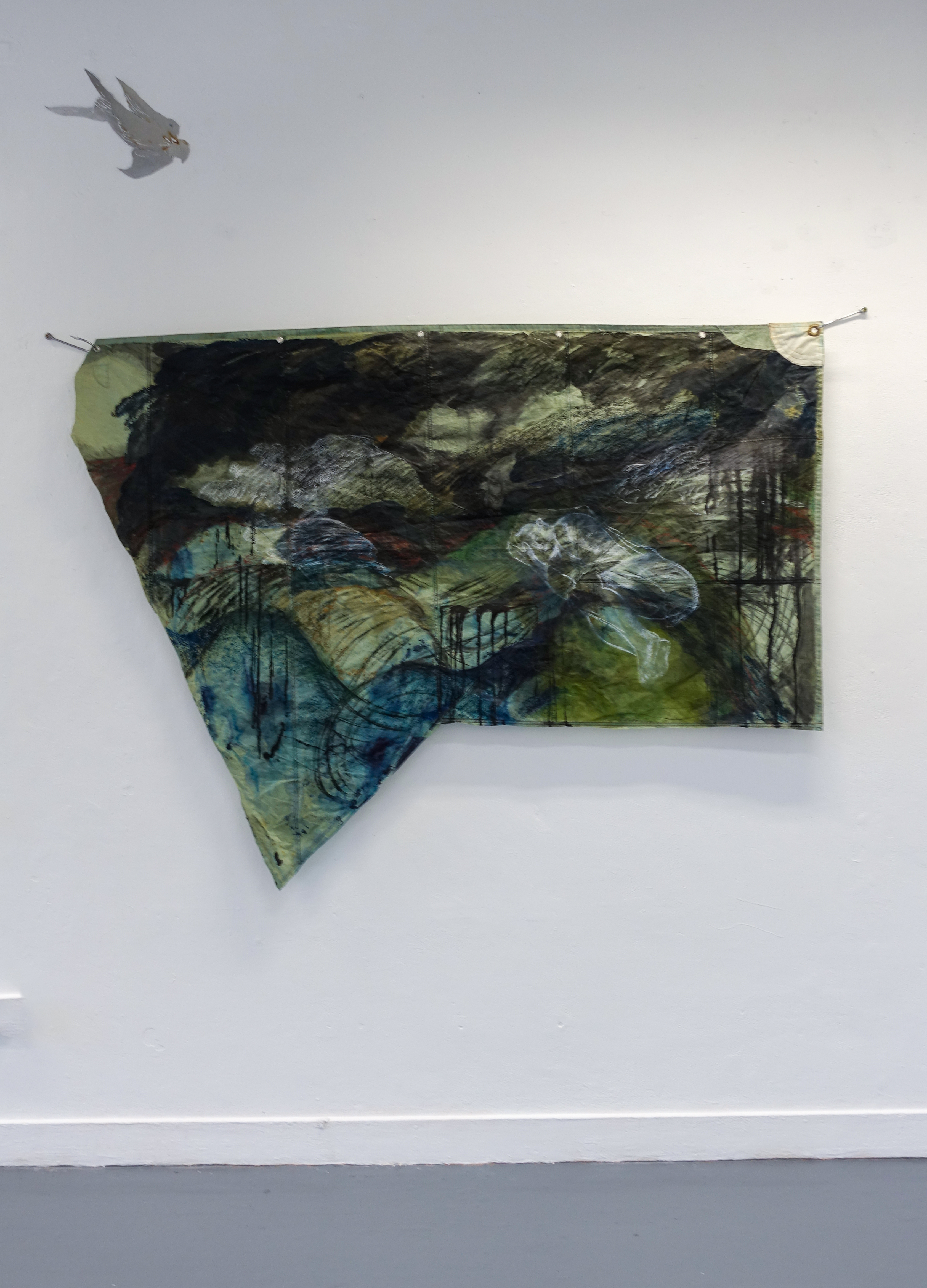
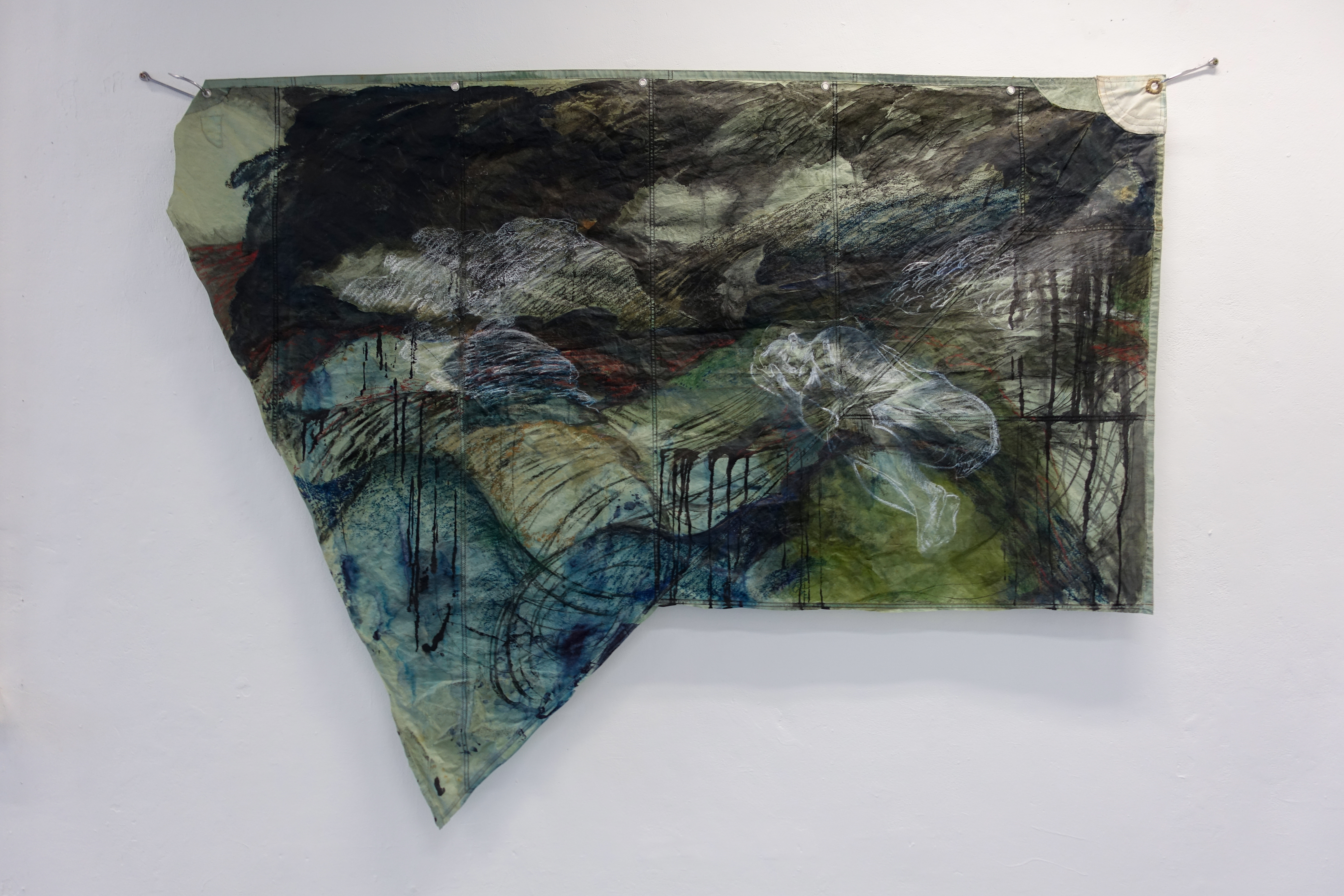
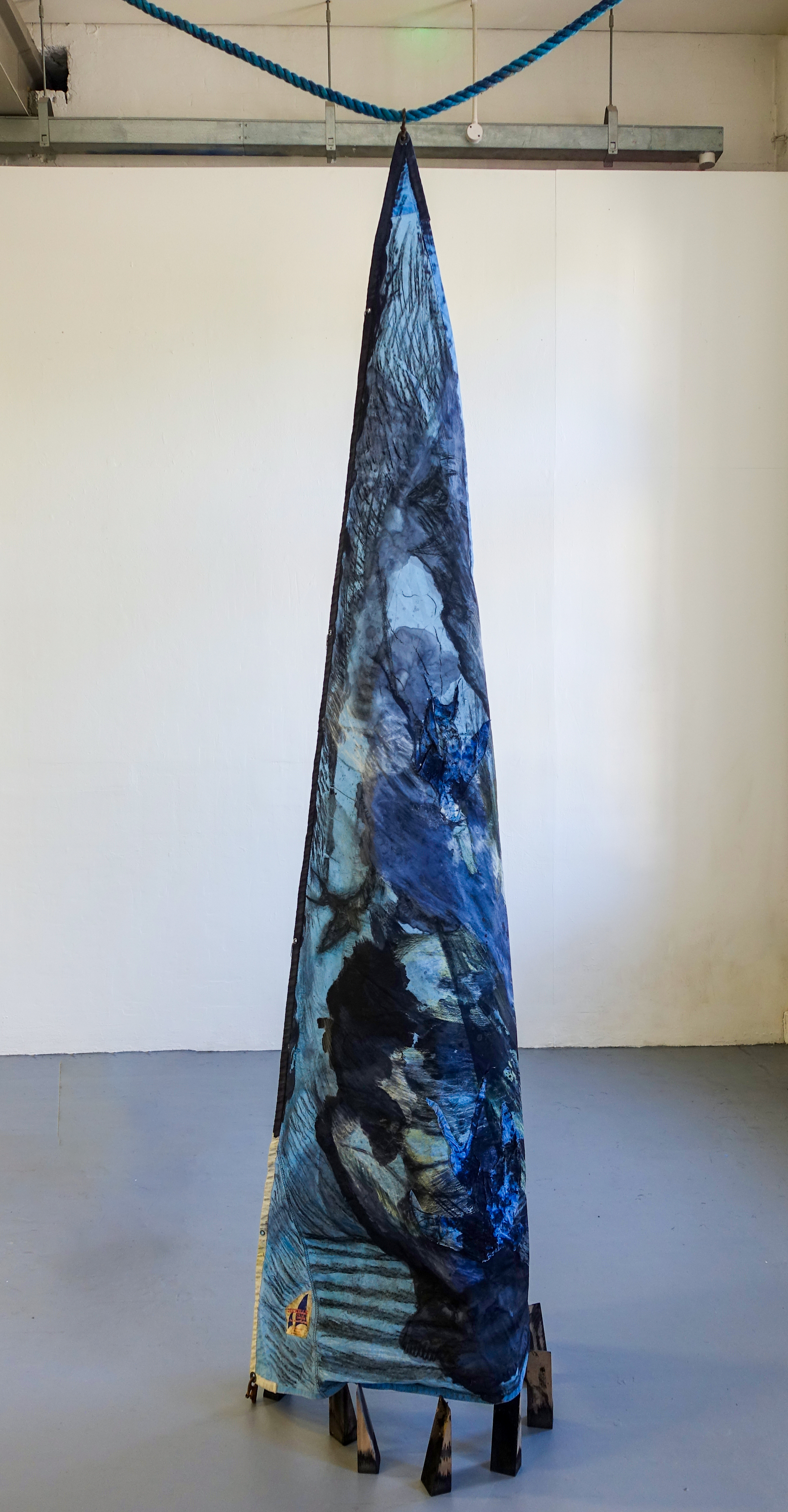
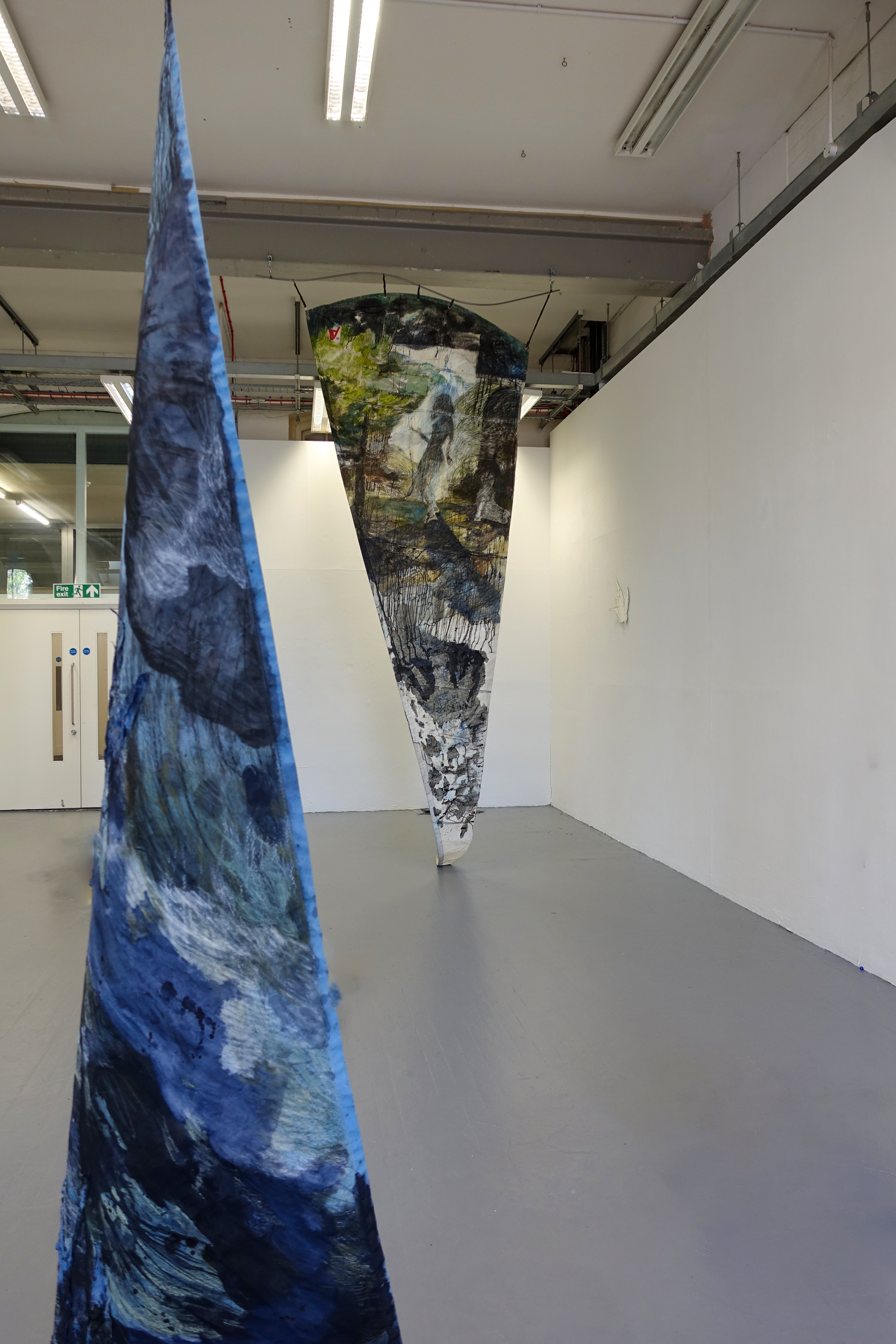
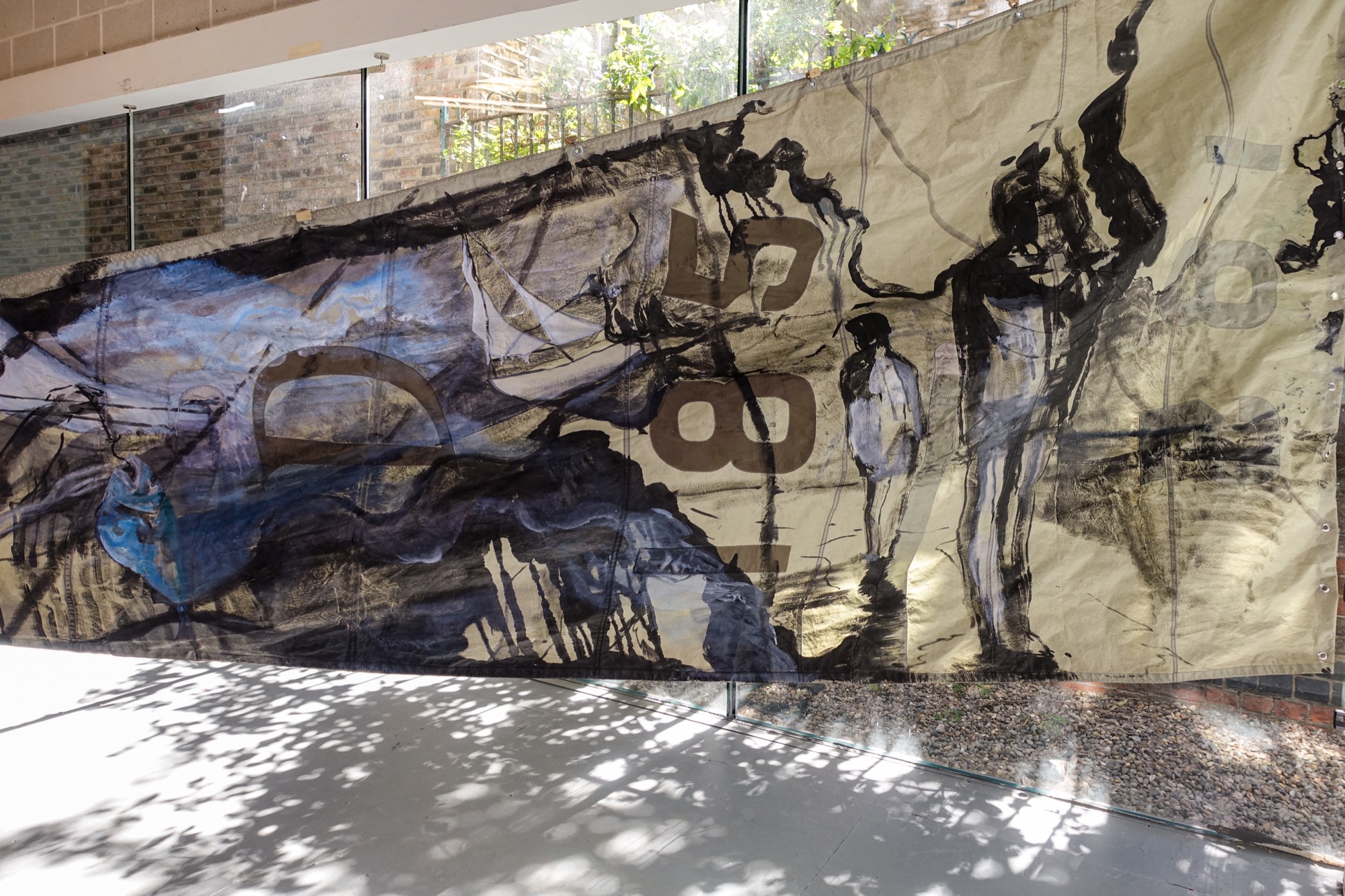
The Failure of Matter is an installation of four painted sails, each titled from a poem written in the studio alongside the work. The titles move between English and Portuguese, between meteorological fact and emotional condition. Cerração. Deslumbrado. Saudade, Anseio. They name states that resist clean translation.
The labour of adjusting to environments not built around you. Of making yourself legible across different contexts. Of being spread across multiple places at once, with people on other ends of the horizon. Of loving across irreversible distance and time.
The failure of matter is loneliness itself.
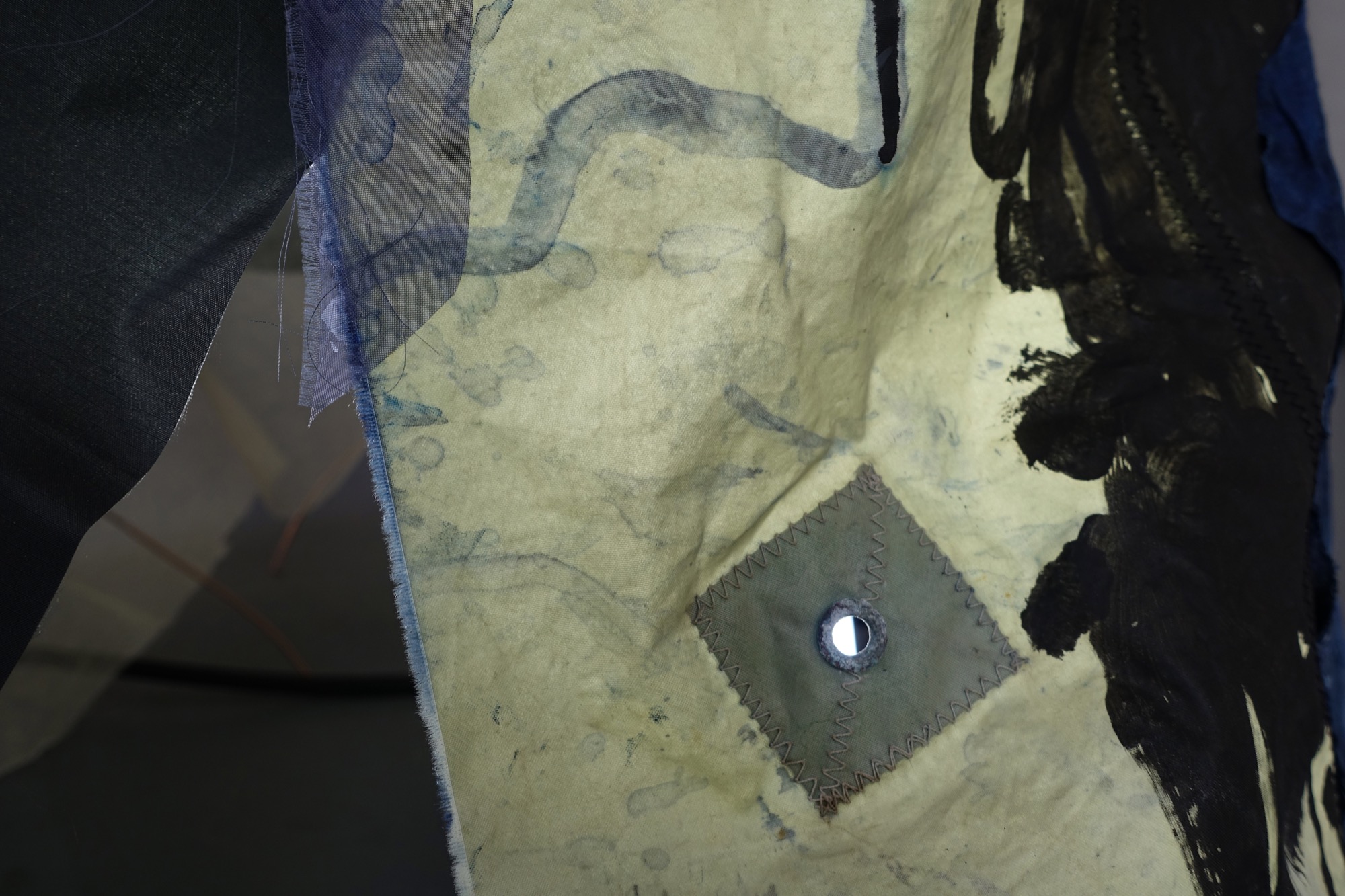
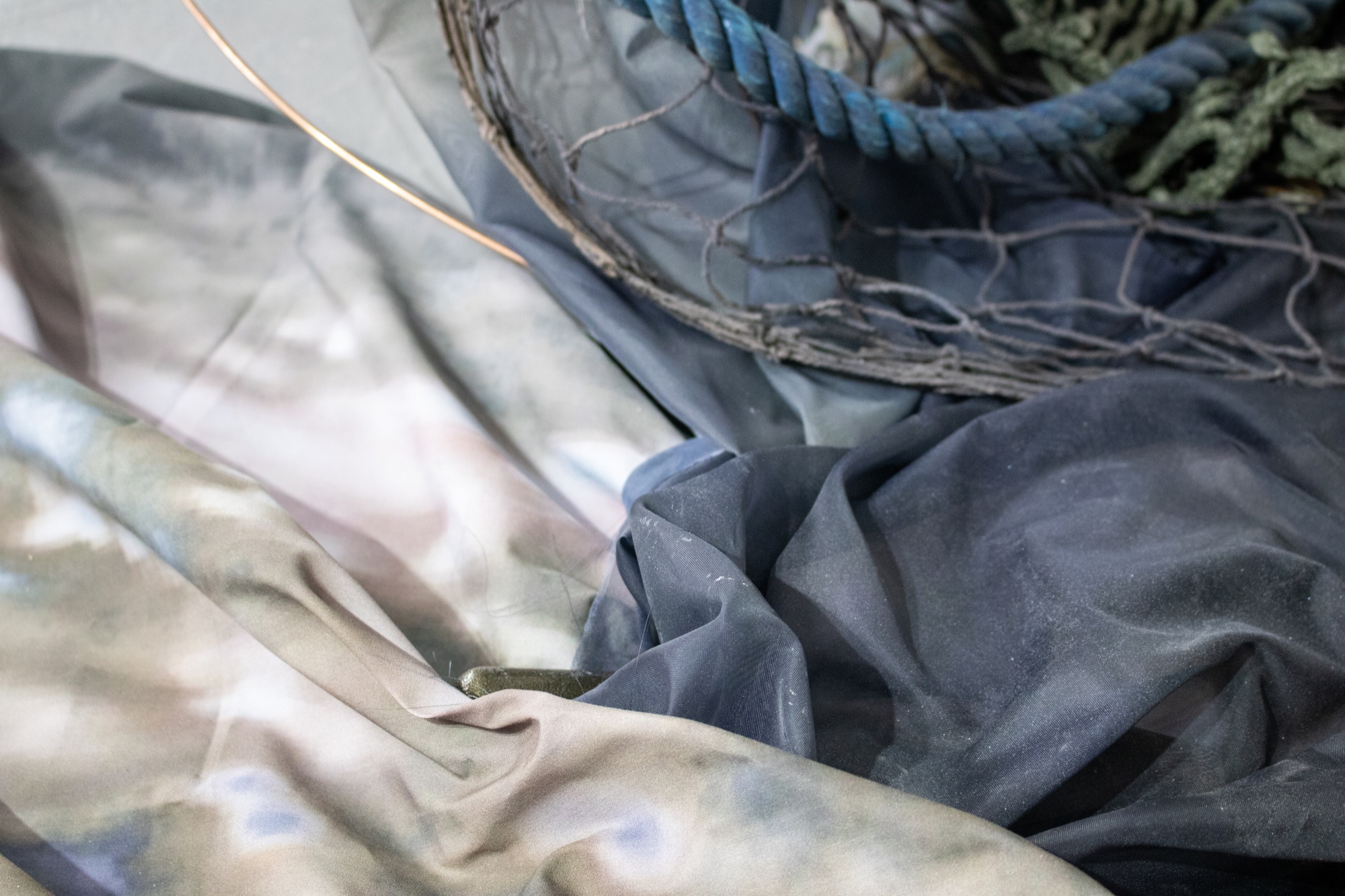
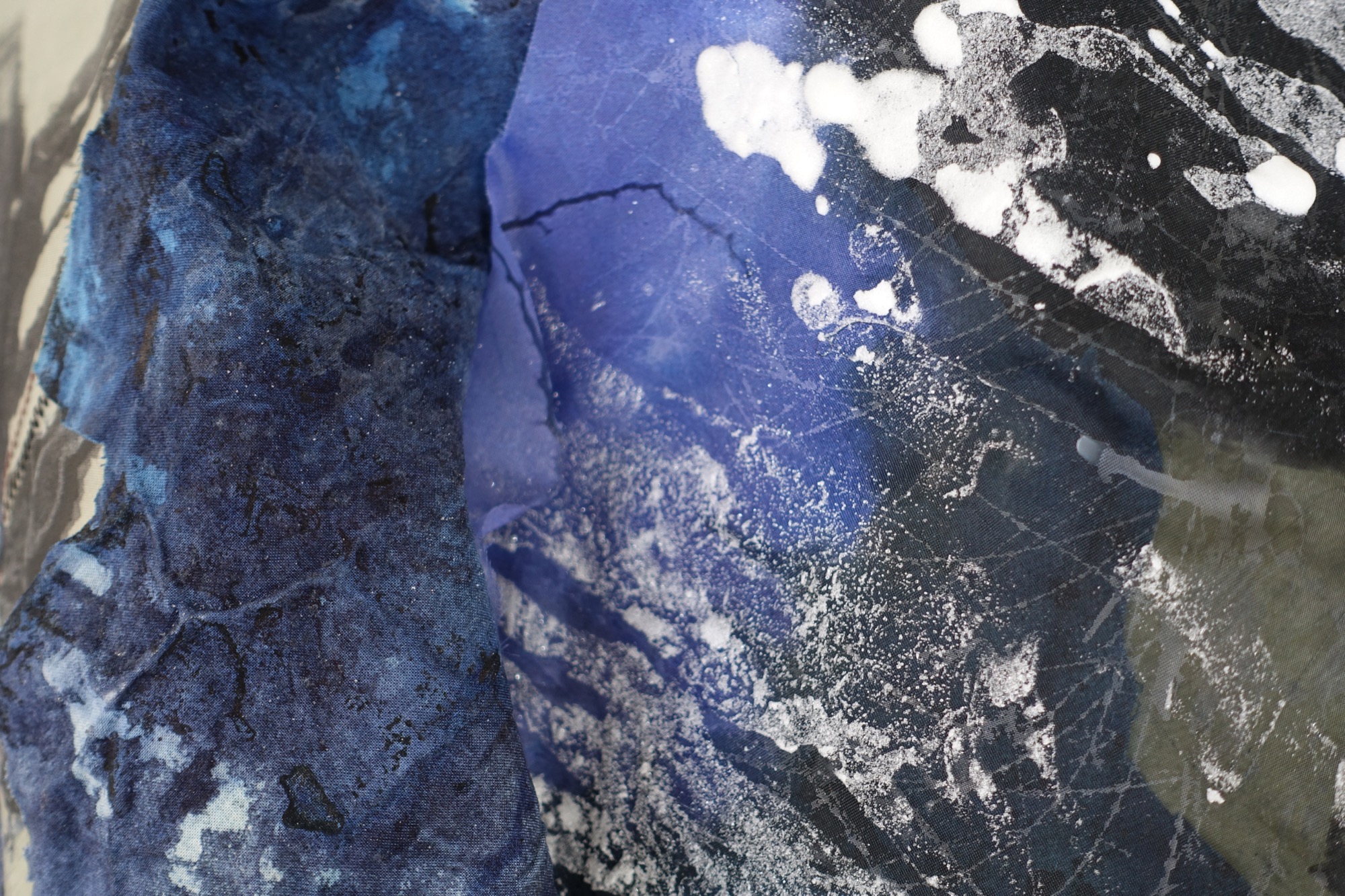
The sails are salvaged, already driven through open water, stretched under load, repaired. Salt and minerals have degraded them. Tears, seams and rust staining are already present in the surface before the work begins. Drawing and mark-making move around these existing marks rather than over them, finding their way through a history that predates the work. Staining matters here because it is permanent: the irreversible unification of two separate things, material and surface becoming one thing that cannot be undone.
Oil, ink, indigo, charcoal, chalk and pastel are added to surfaces that have already absorbed years of friction. The poem runs through the paint in fragments.
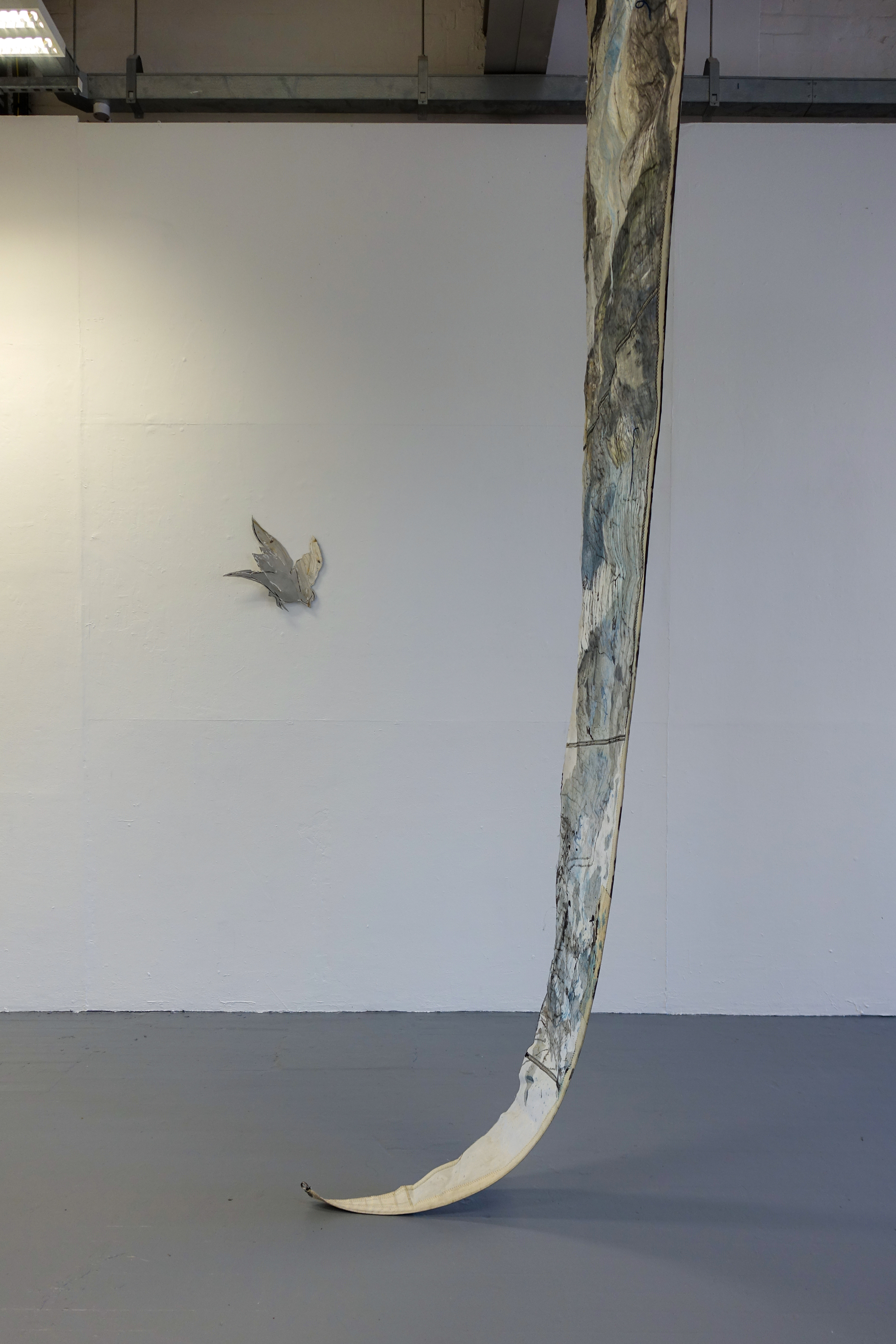
The installation operates as a weather system. The sails exist as atmospheric pressure in the space, and the audience moves in and through them rather than past them. Each sail is double-sided: the work can never be perceived in its entirety from any single position. To see one face is to have the other withheld. This is structural rather than incidental. You cannot be in more than one place at once.
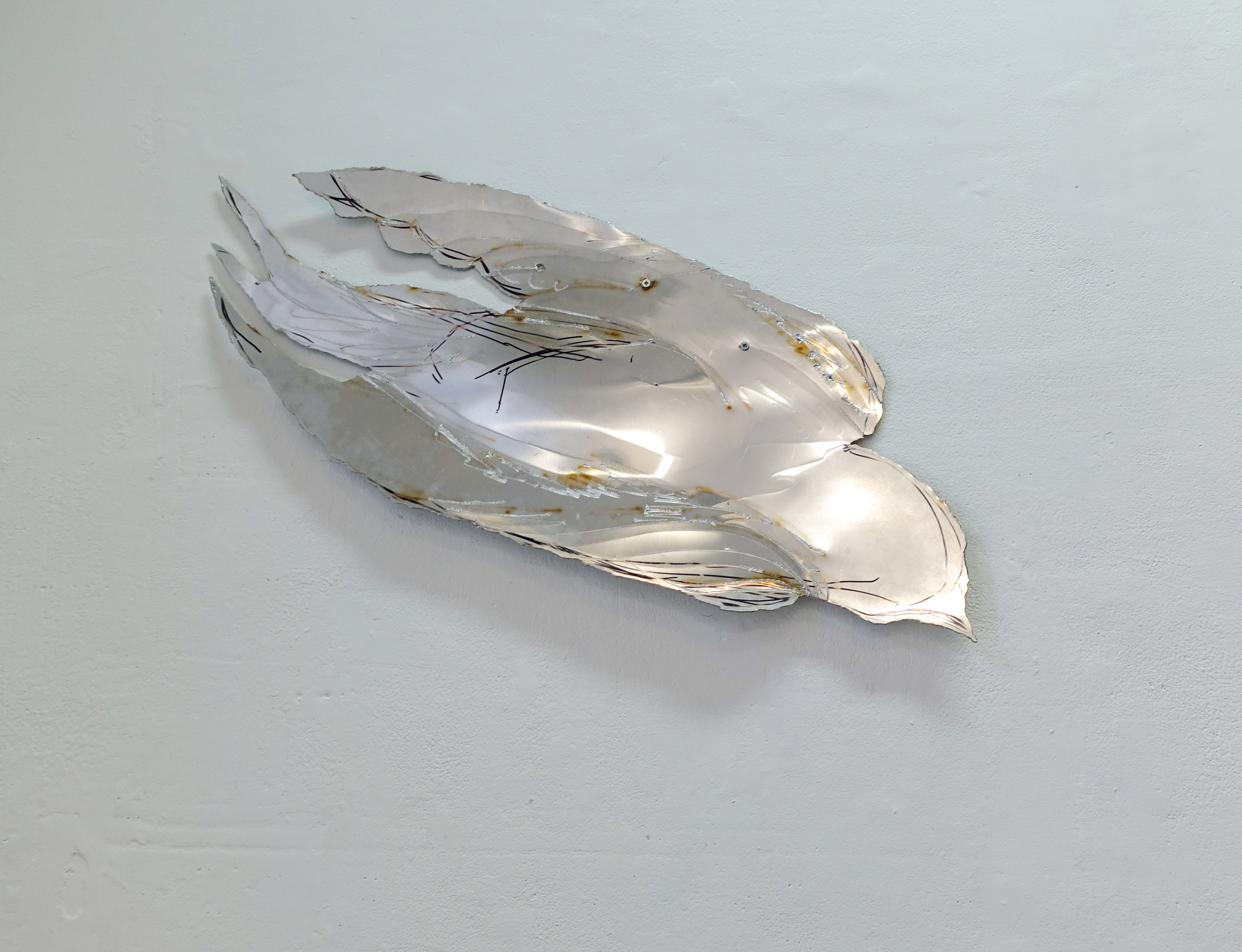
Aluminium swallows cut with a plasma cutter move through this atmosphere. The plasma cutter is a drawing tool, immediate and irreversible, and the swallows carry that quality: sketchy, precise, made in a single gesture. Swallows migrate across the Atlantic and return to the same place. They are among the smallest birds to make that crossing. The work sets them inside conditions of fog, rupture, and salt degradation, and they persist.
These pieces are resilient but expose fragility. They have an innate resistance and yet need support. They are the condition of a body that absorbs pressure and survives despite it. A body that loves regardless of time and distance. That wishes and hopes for the impossible.
The poem ends in the present tense: I am still reaching.
I sat in a fog so dense
It stayed in my chest, Cerração
I carry it with me now, and it waits like it does
In the bends of a road
To cover and consume me
When the gale winds blow
And when it is so still
The deer lose themselves inside it
Only to be lit by headlight beams
For an instant, Deslumbrado,
To be swept away again
Or
The atmosphere builds and ruptures in a violent crash
A lightning rod conducts its incandescence
With a force so intense,
The scent of ozone lingers
I am there but I no longer exist
I am particles
I become myself cold and atmospheric and disappearing
Swallows
I let the redwoods swallow me whole because
I remember us all in them
You turn away, Desencontro, and I am fog again
I condensate and drip down sails
I pool in murky clouds
Driven hard through open sea,
I calcify
The minerals and salts degrade me
I absorb every ounce of friction and the marks run through me
I am a sail
I am weather
I have tears and seams
Stained and rebound I reach across impossible distances toward you
Toward then
Then a past, Saudade
And then a future, Anseio
I am still reaching
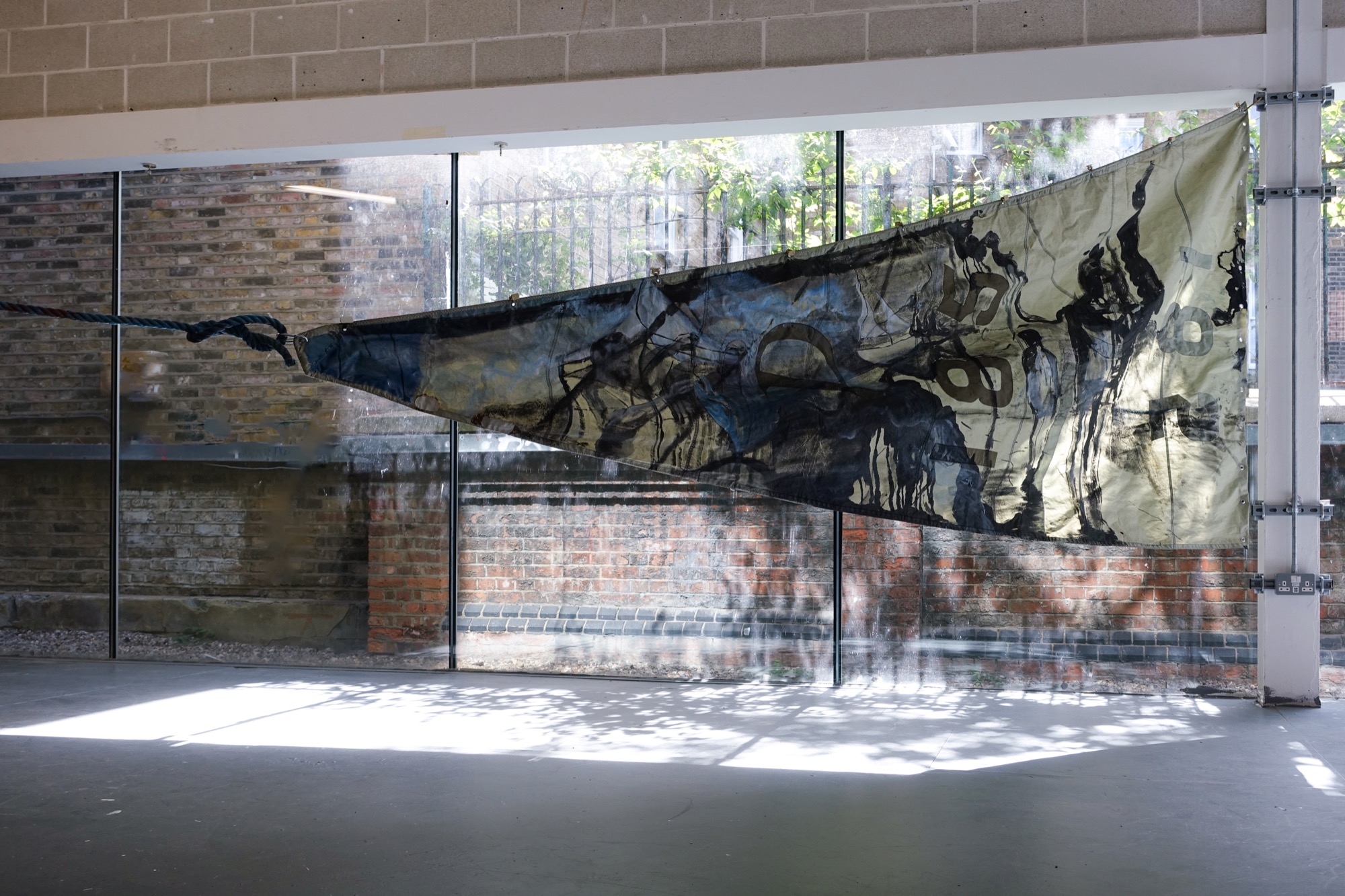
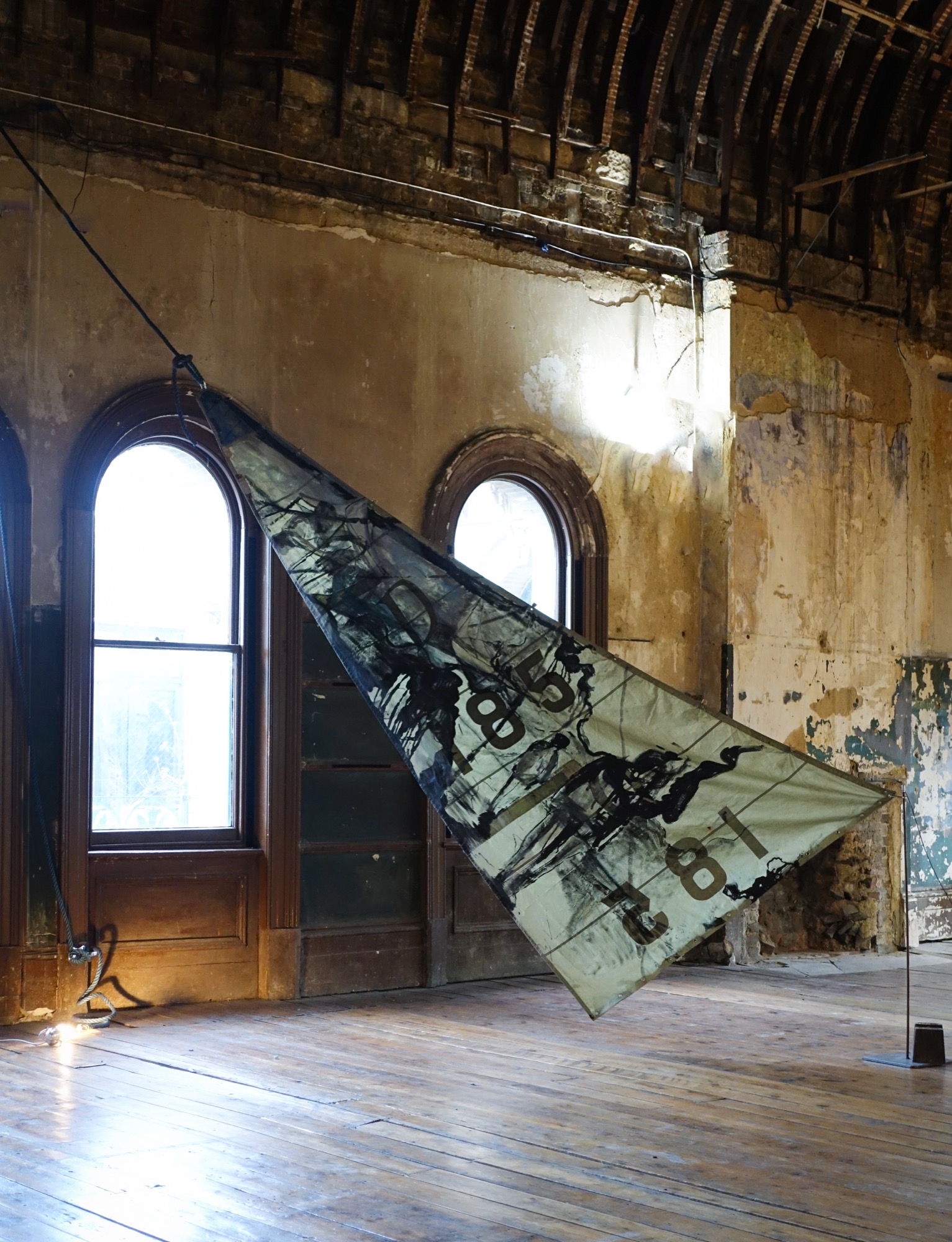 Installation view · Platform, Peckham Rye, 2026
The sail used in this work was part of a working boat before the material arrived in the studio, driven through open water, stretched, loaded and repaired over years. This history is visible in the surface. The work began from a geographic history: growing up between the US and Brazil, and having since immigrated to the UK. The Atlantic has always been the space in between.
The ocean operates here as a "hyperobject" in the Timothy Morton sense: something so vast and so distributed across time and space that it can never be perceived in its entirety. It is always experienced from one edge, locally, in the marks it leaves on a sail over years. This is part of why it works as a methodology rather than a subject: a hyperobject cannot be depicted, so the work must come from inside it.
Working from a surface already bearing marks of its own past meant engaging with staining, texture, and structural seams as marks of survival. The figures painted onto the sail had to negotiate that history to find their own position within it. This is the central subject of the practice: bodies finding their place within conditions not built around them, and the choices made when outside conditions make those choices necessary or desired, even when they carry a cost.
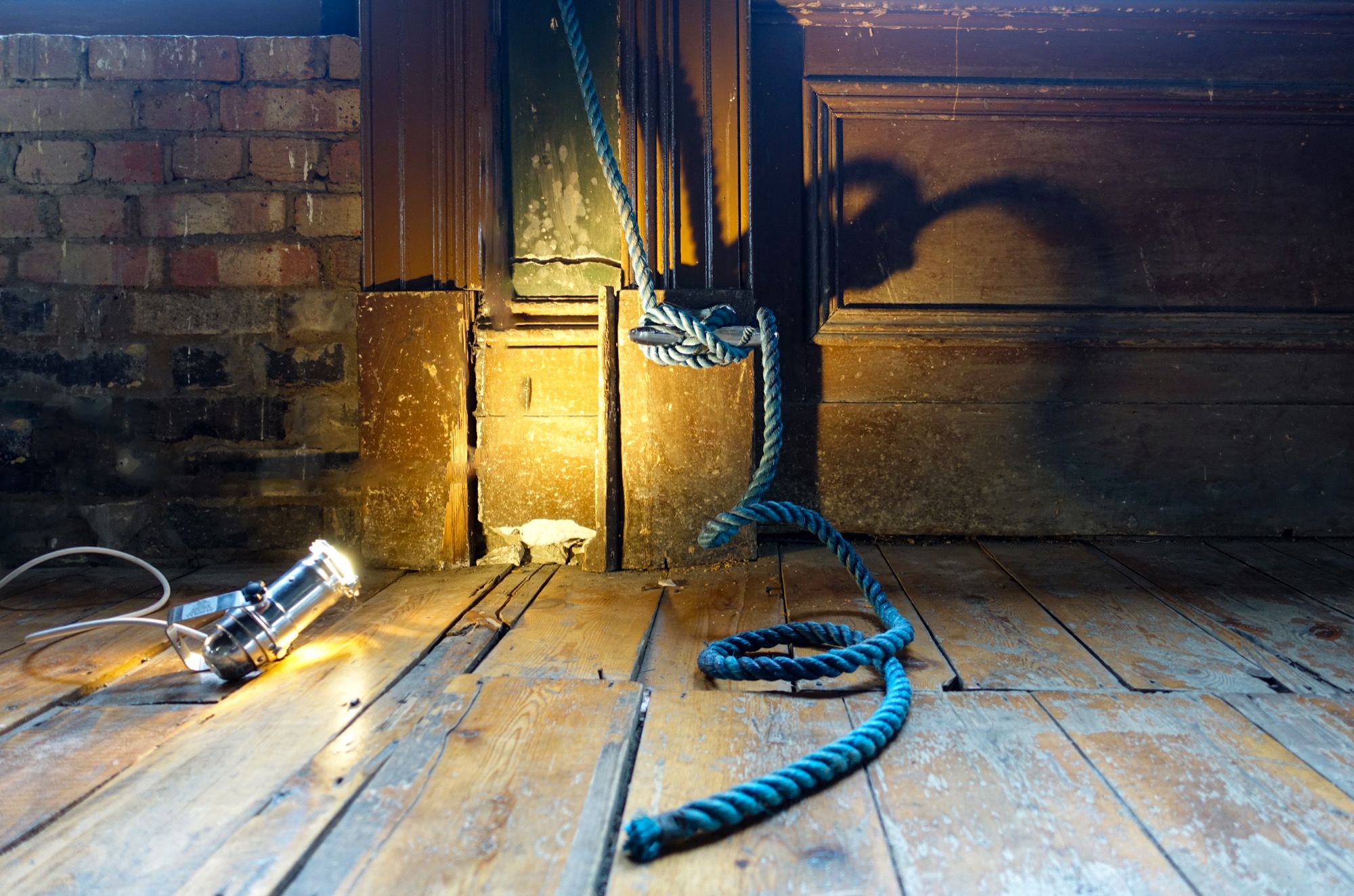
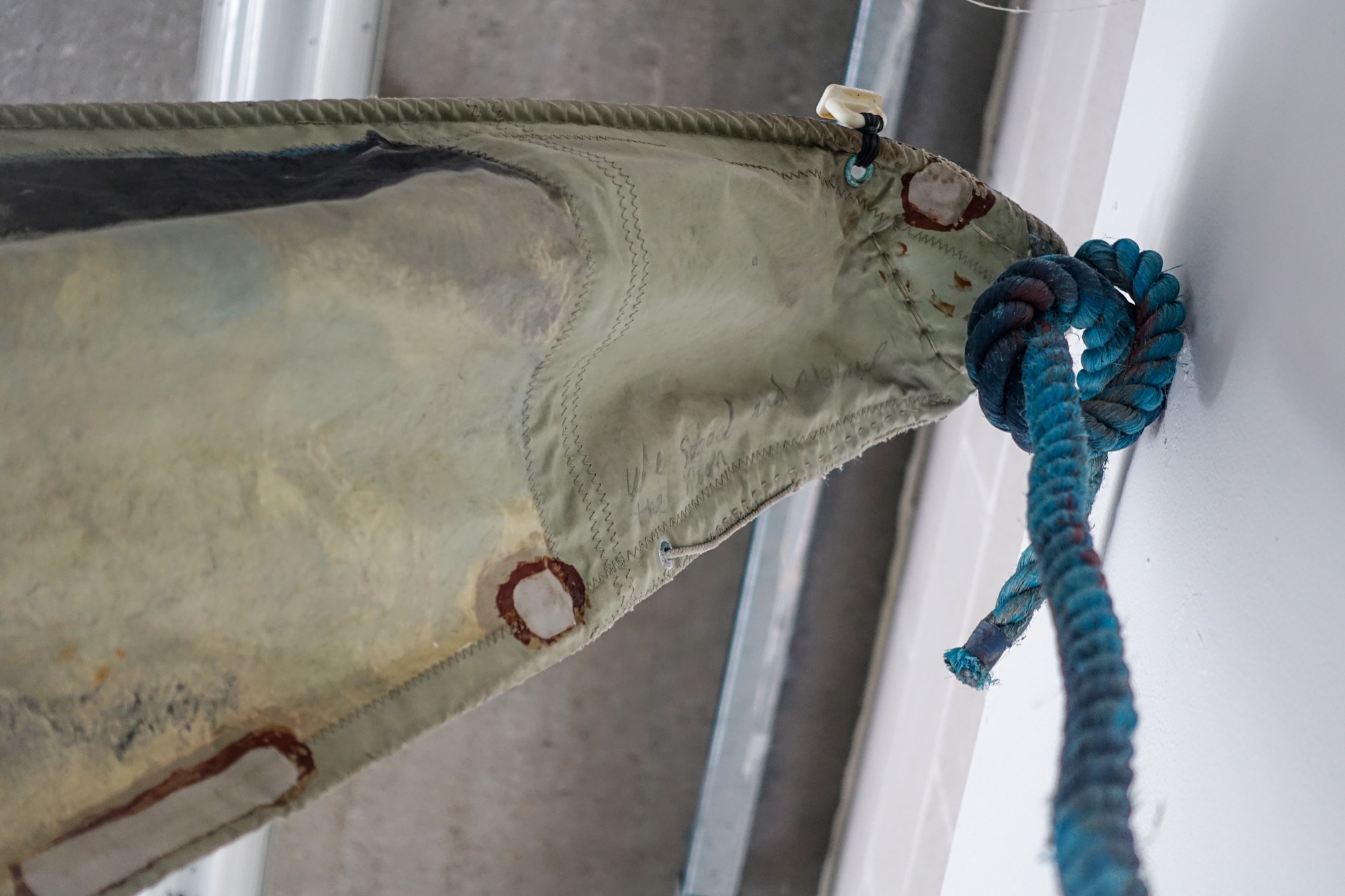
The word "across" names distance between two things, neither of which can resolve the space between them. The impossible thing being looked across is the ocean, the horizon, and love. "Still looking" implies a maintained effort across that distance. There is text written faintly in pencil on the back of the sail: we stood and claimed the moon. A gesture toward something shared across an impossible distance, a claiming of what cannot be possessed. Legible, but only if you look closely.
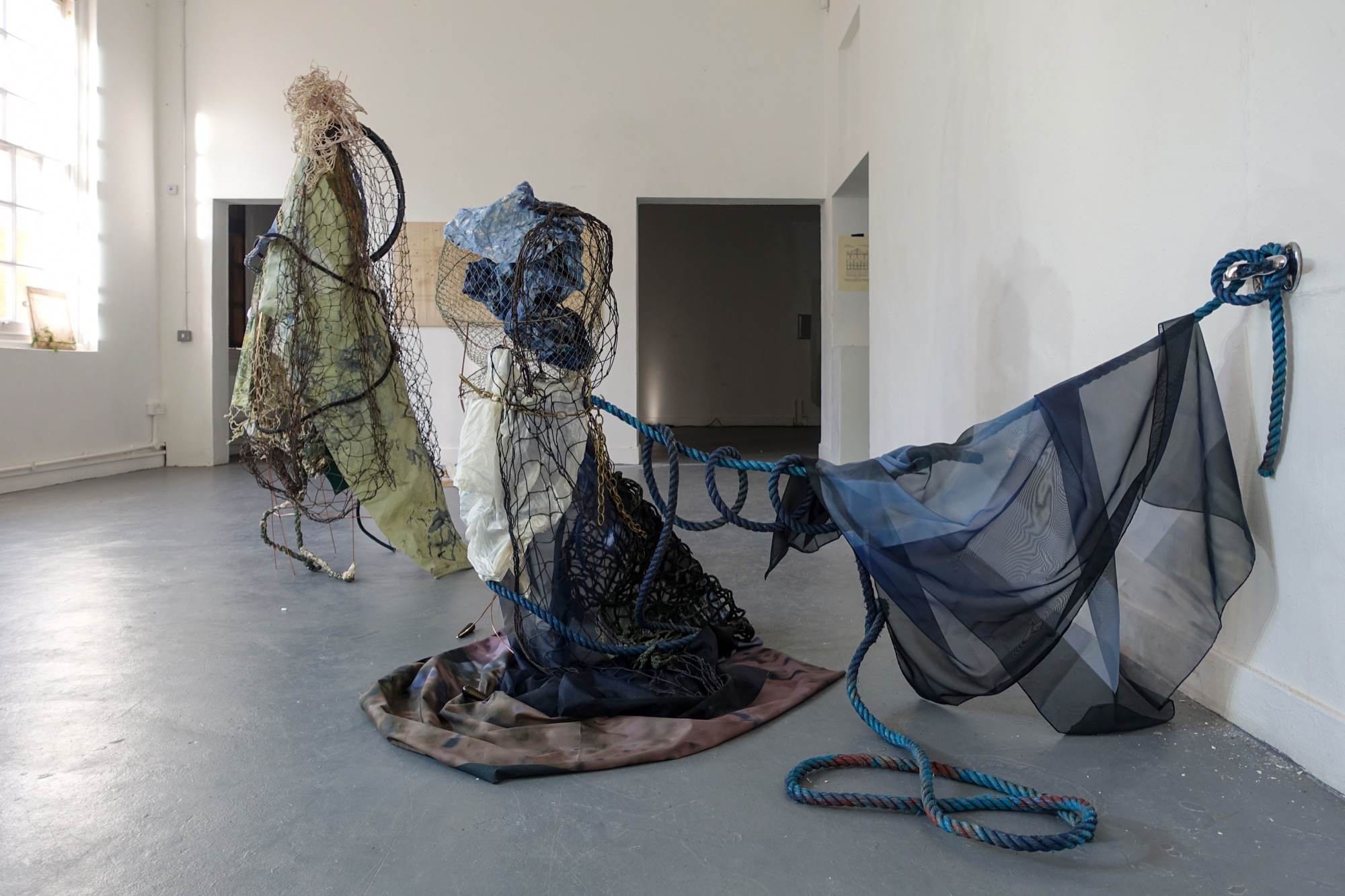
A mooring cleat and rope tether the work to its space, enacting their true function: to keep things from drifting away. The labour of holding a position, of still looking, of forever reaching across impossible distances, is what the work makes visible.
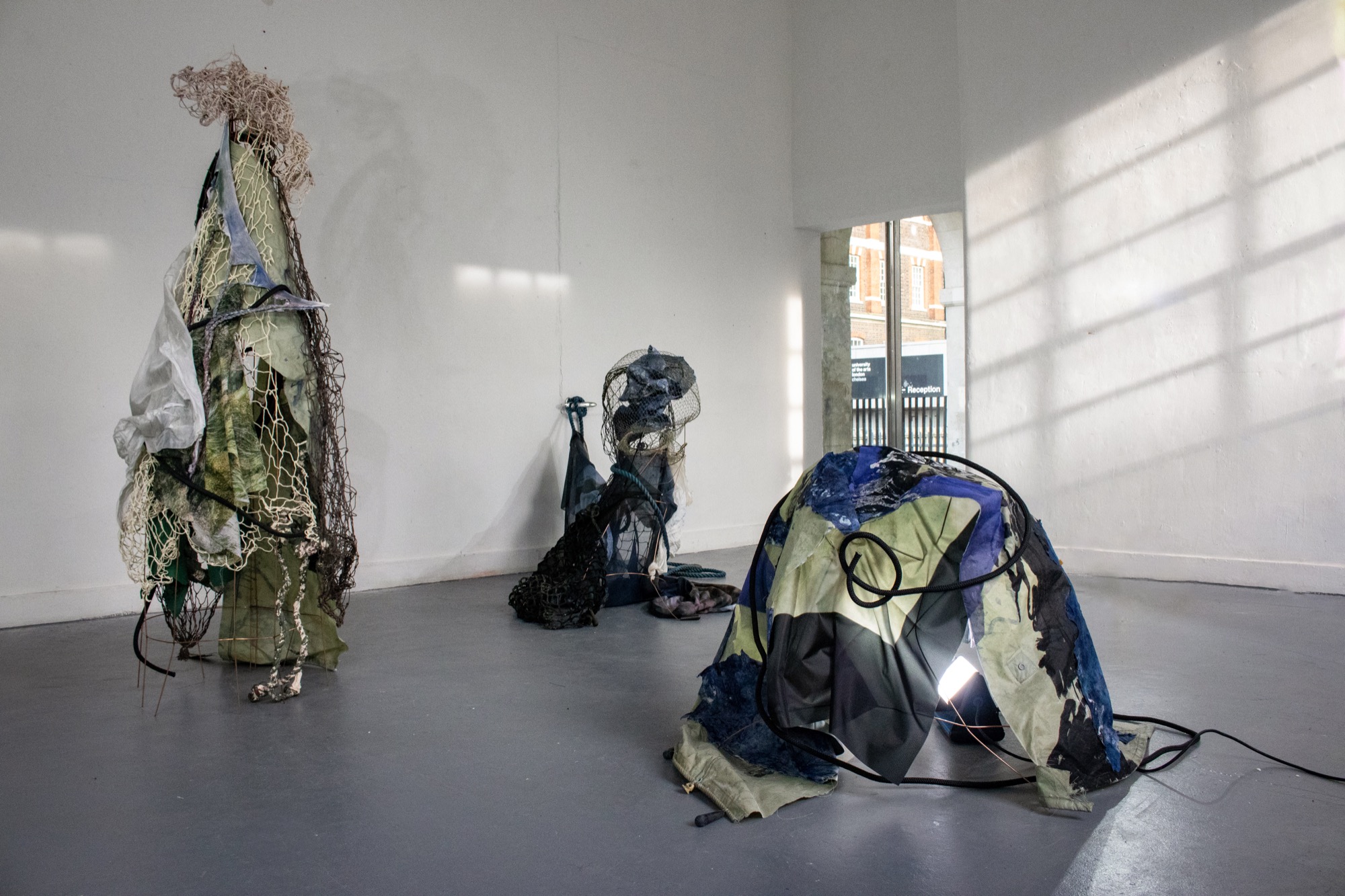 Installation view · Home House, Chelsea Cookhouse, 2026
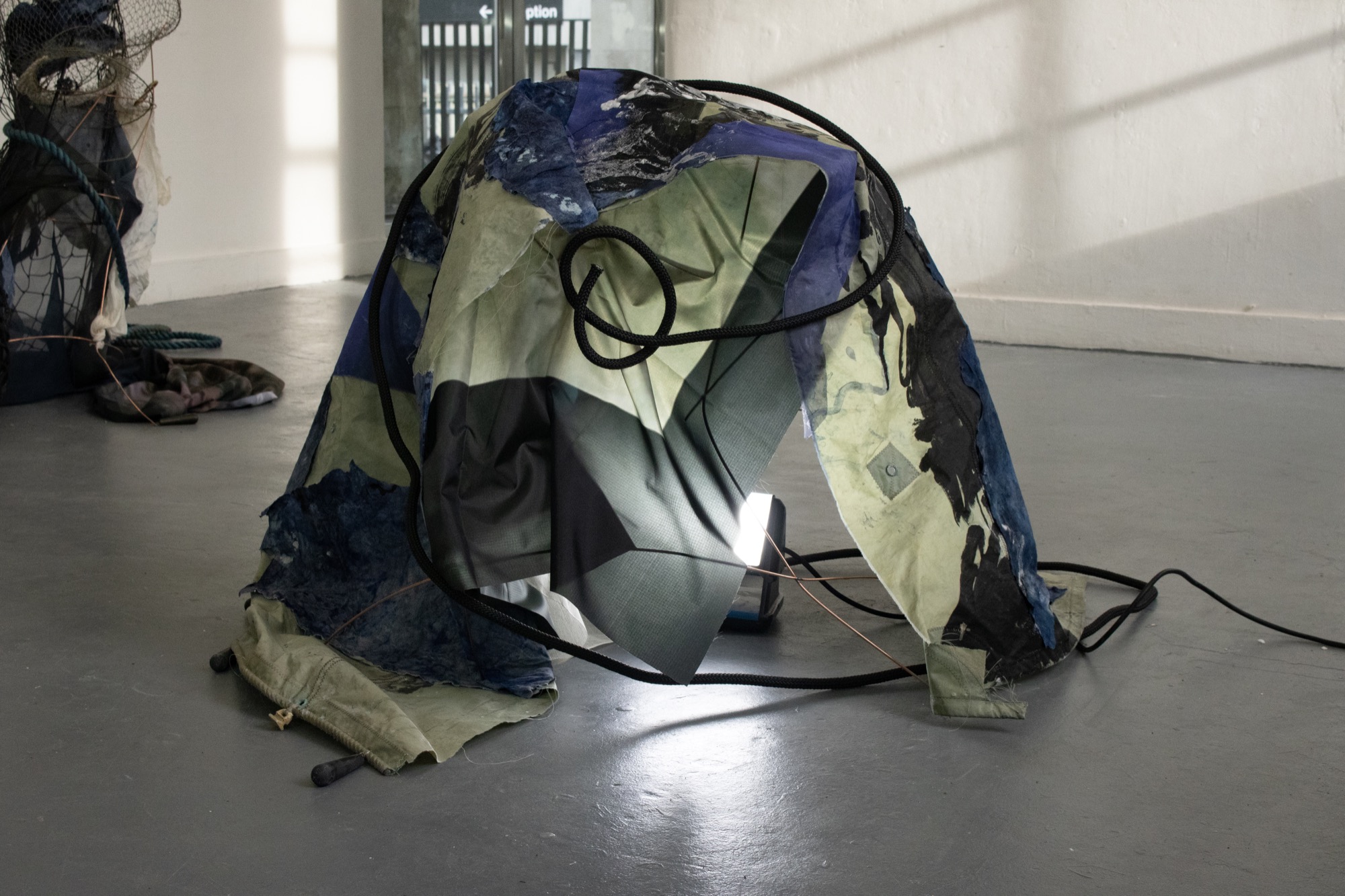
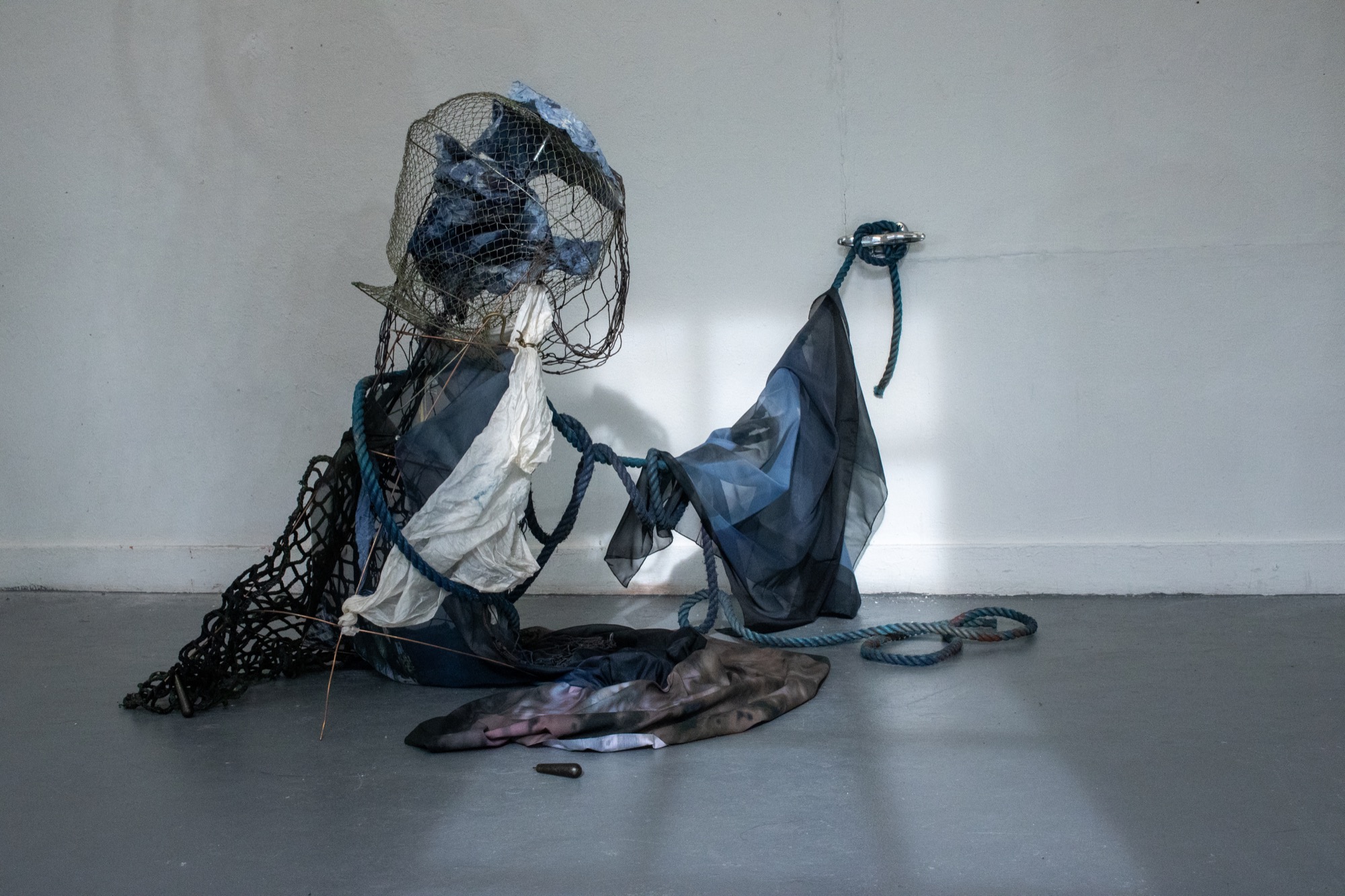
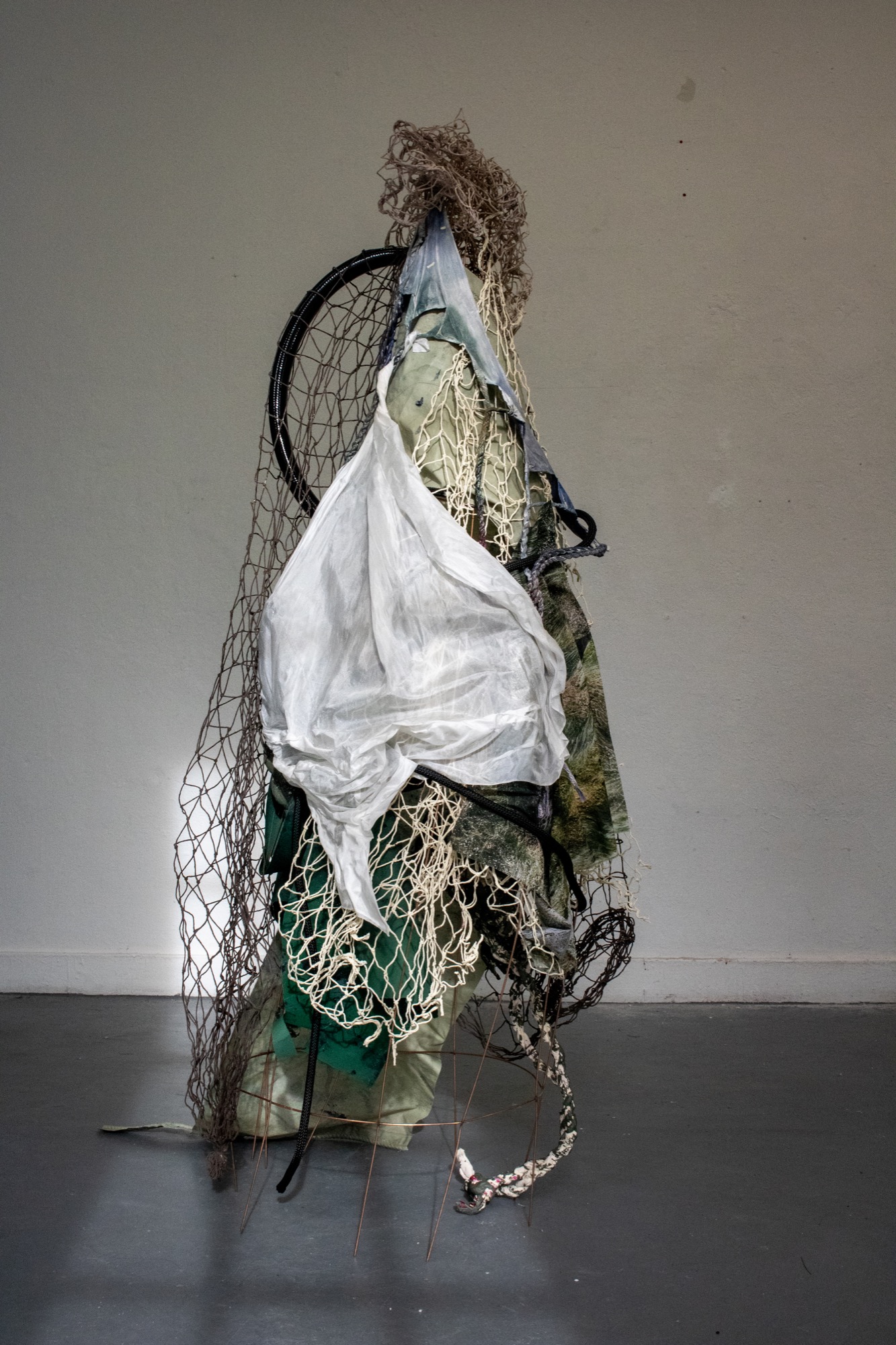
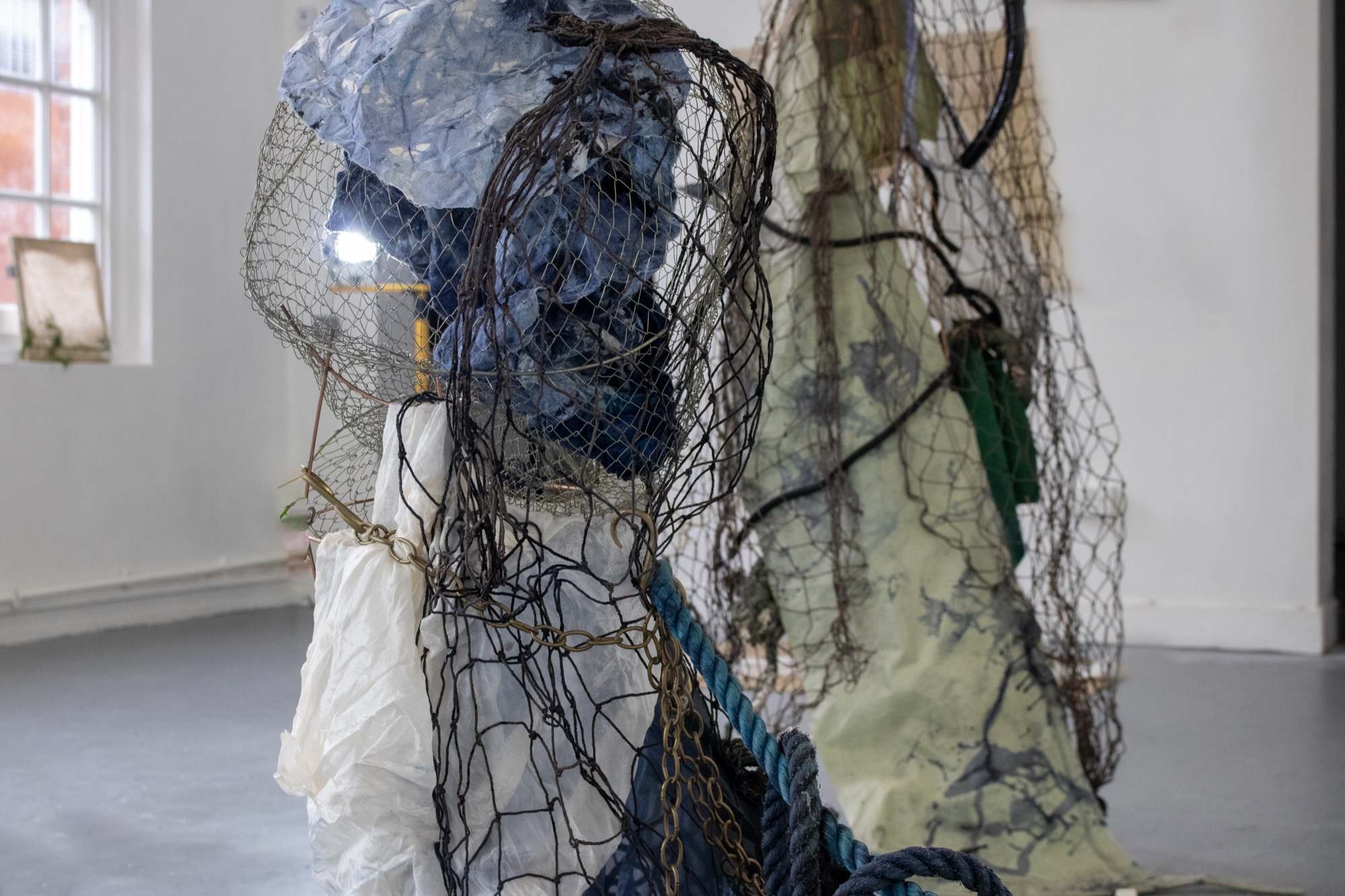
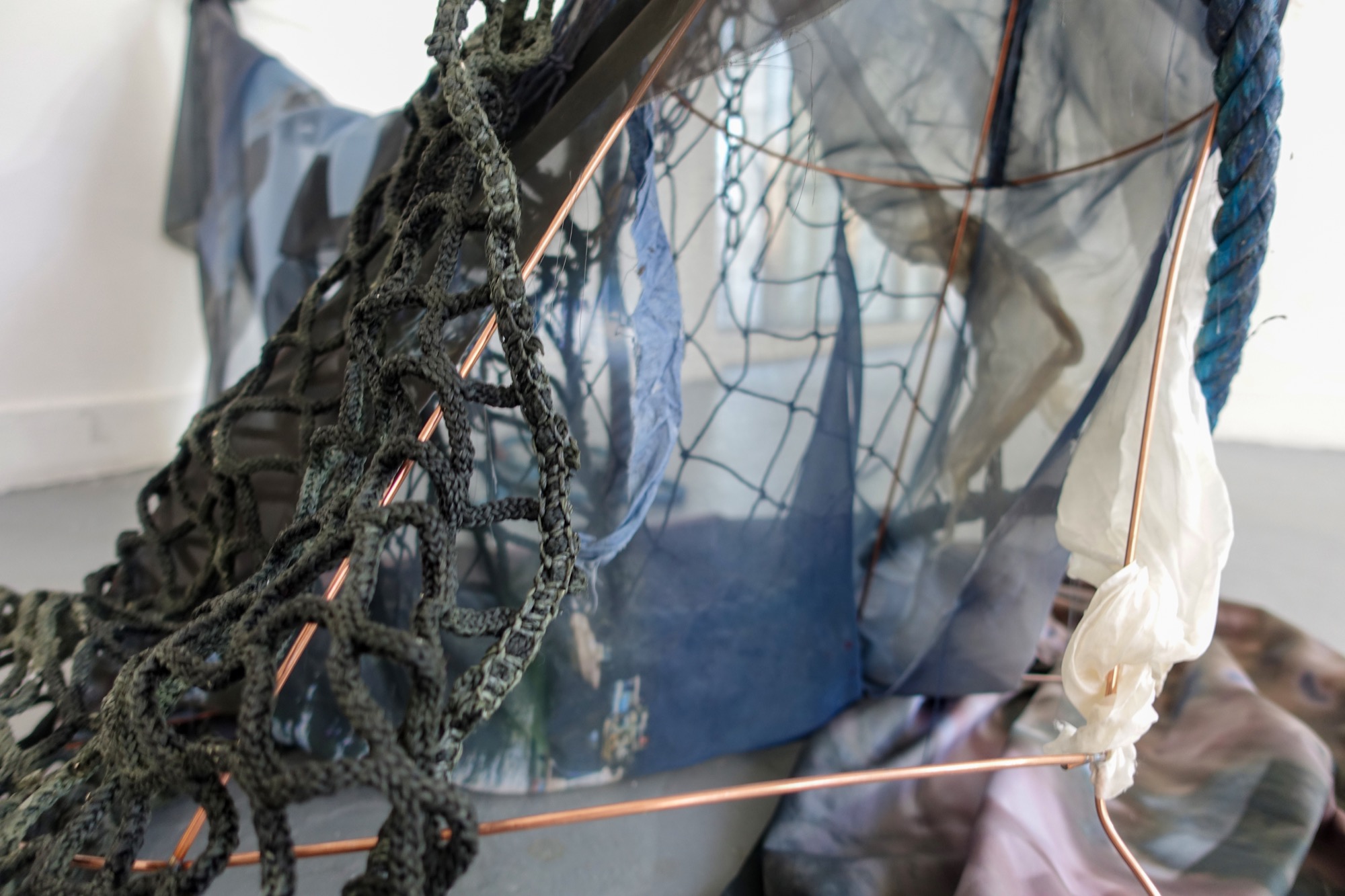
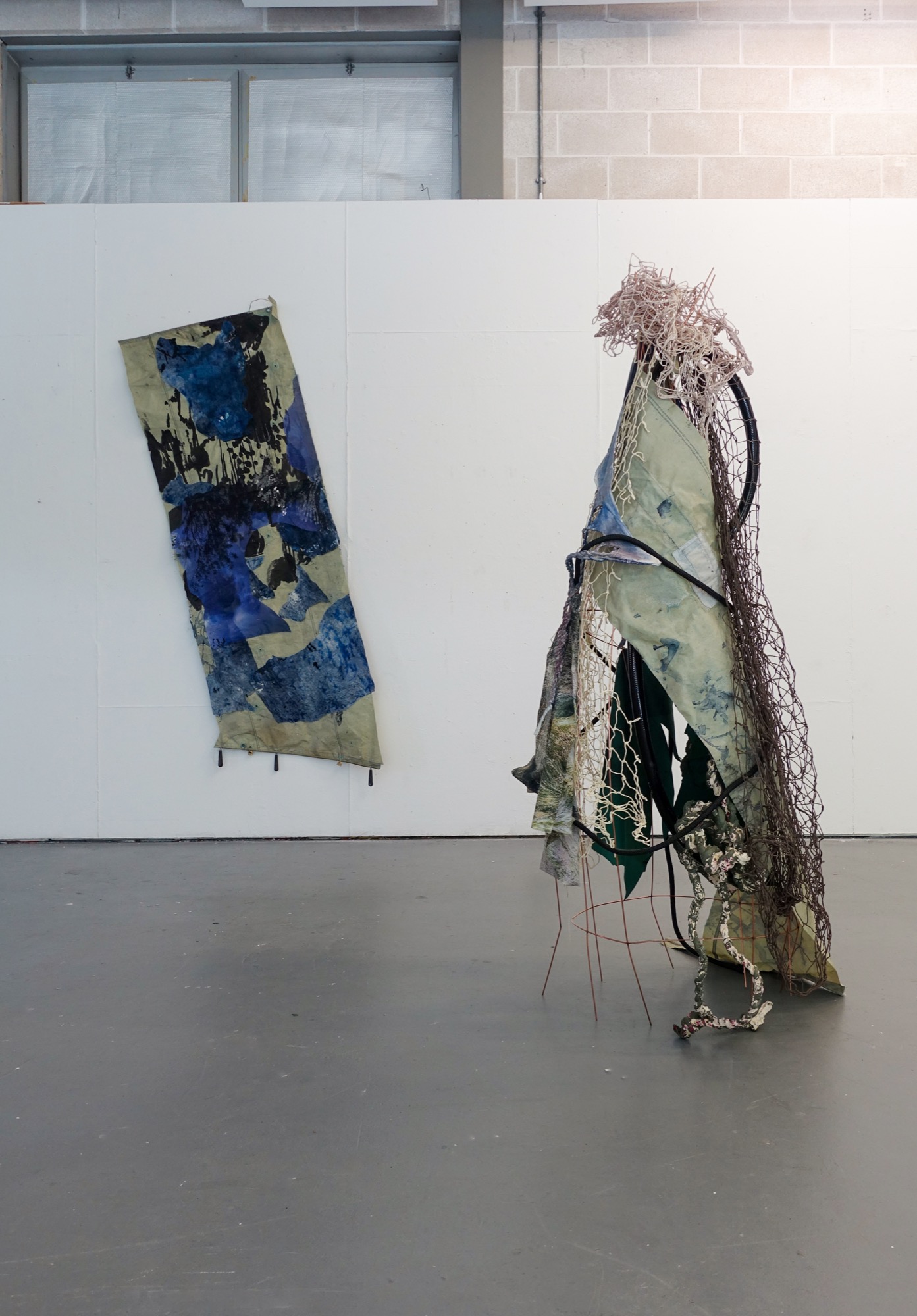
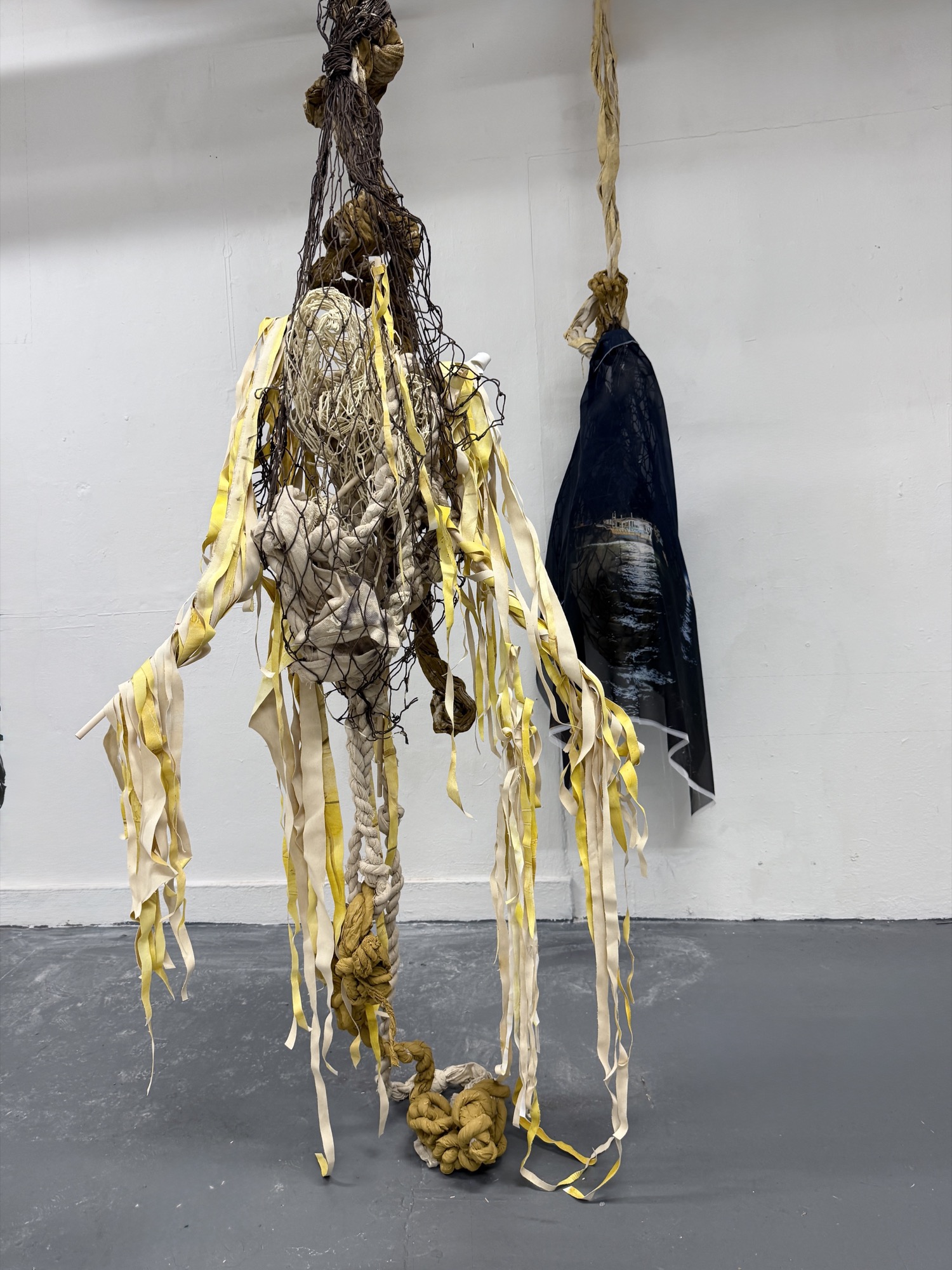
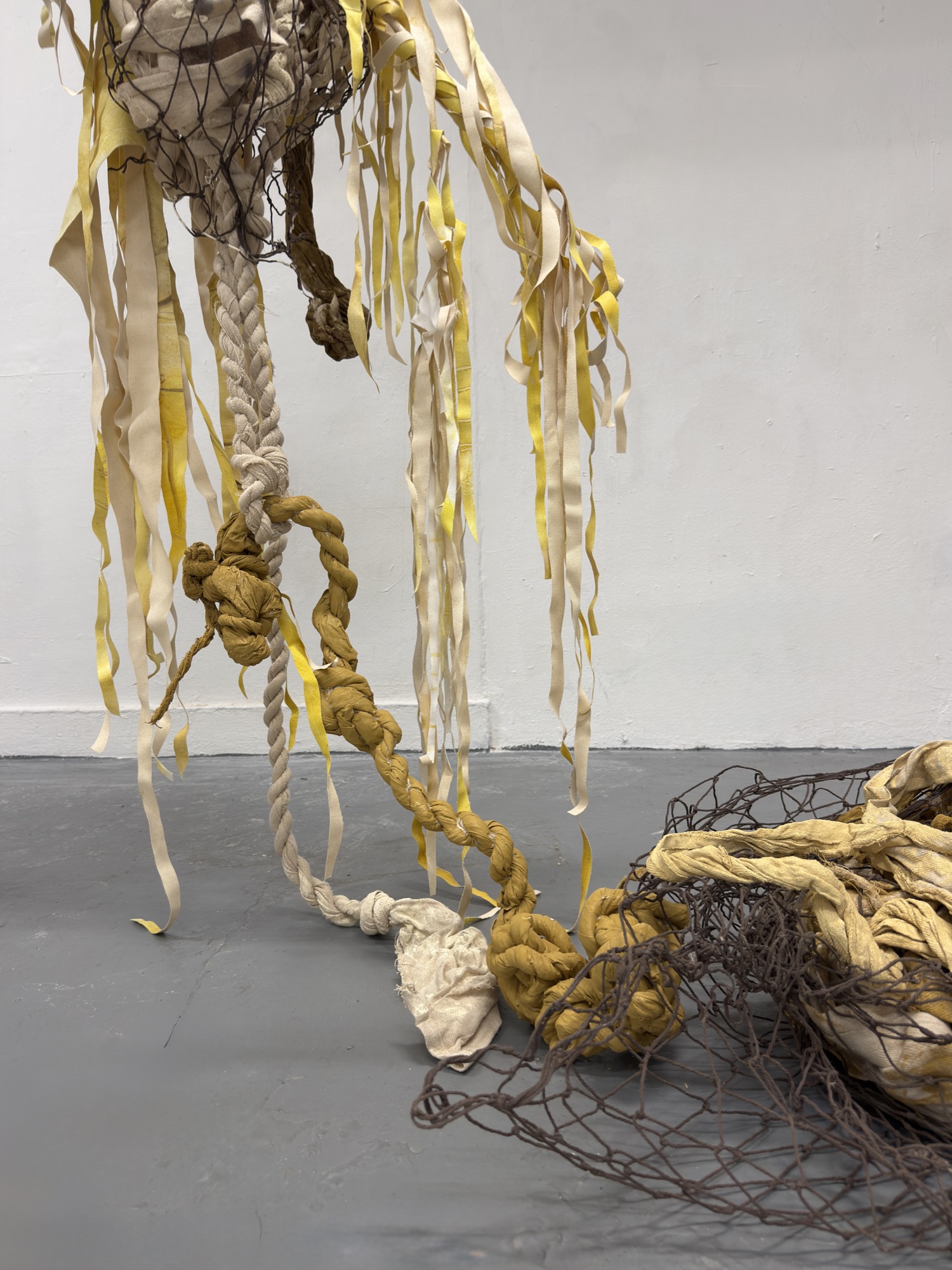
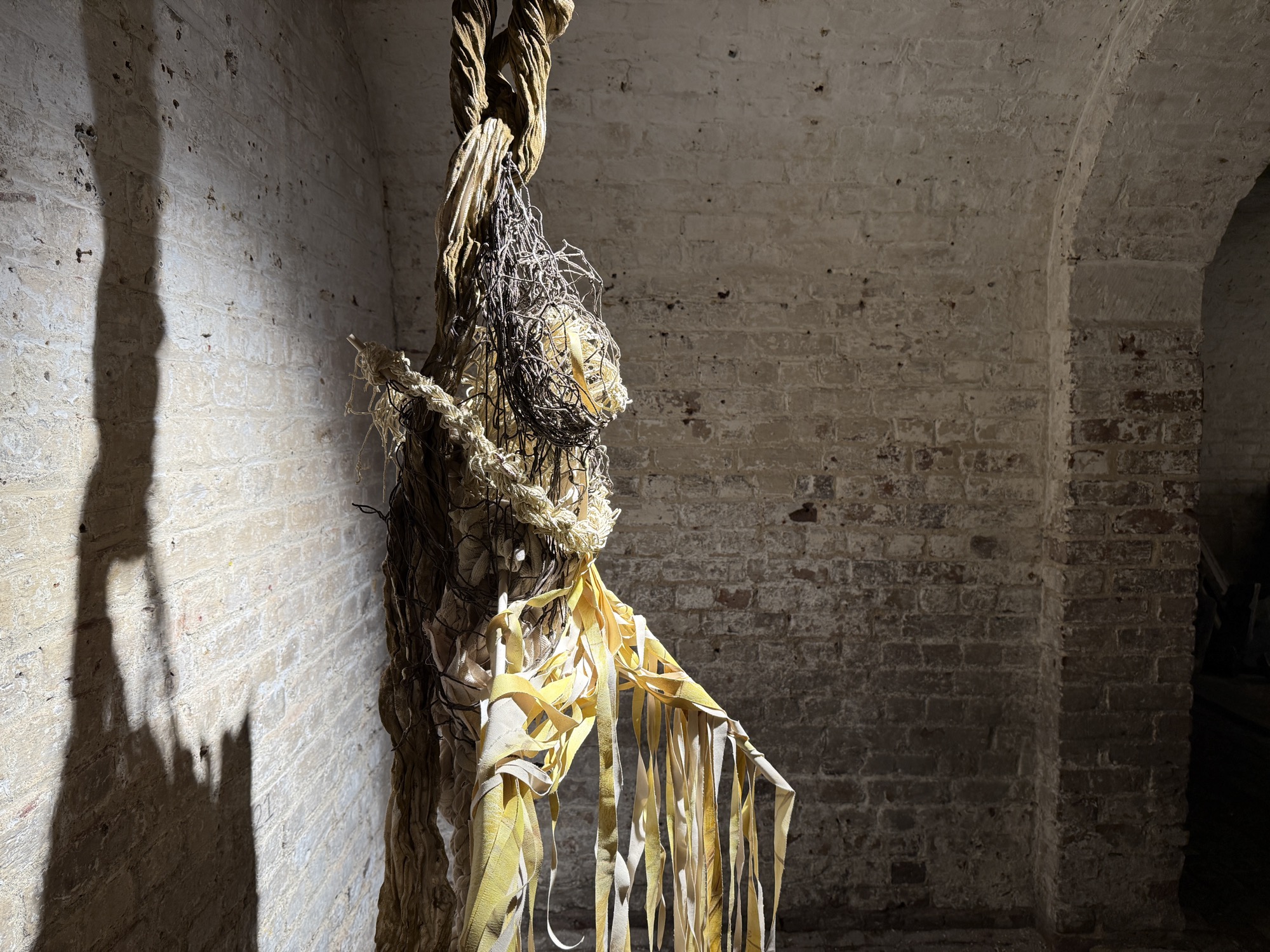
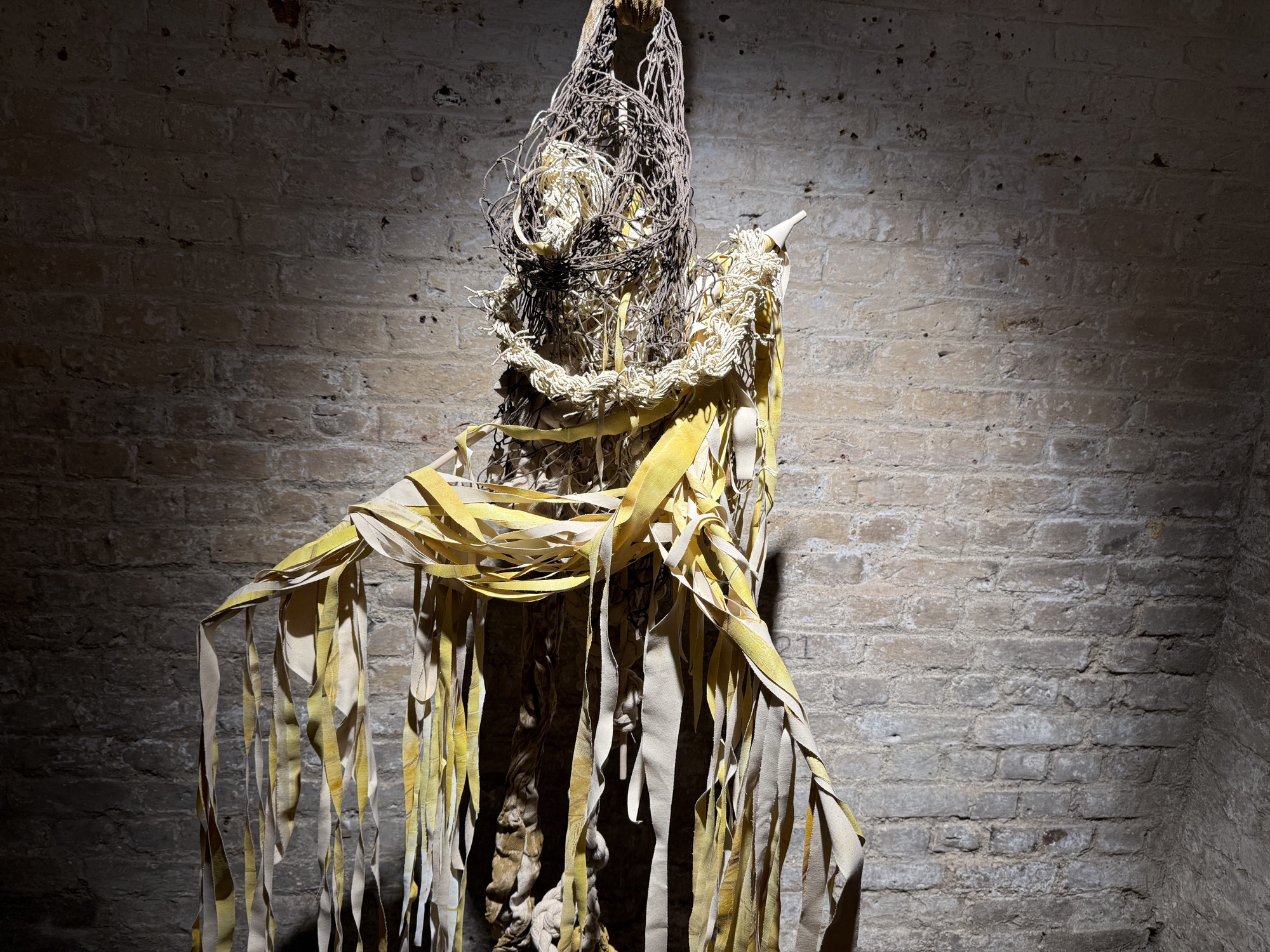
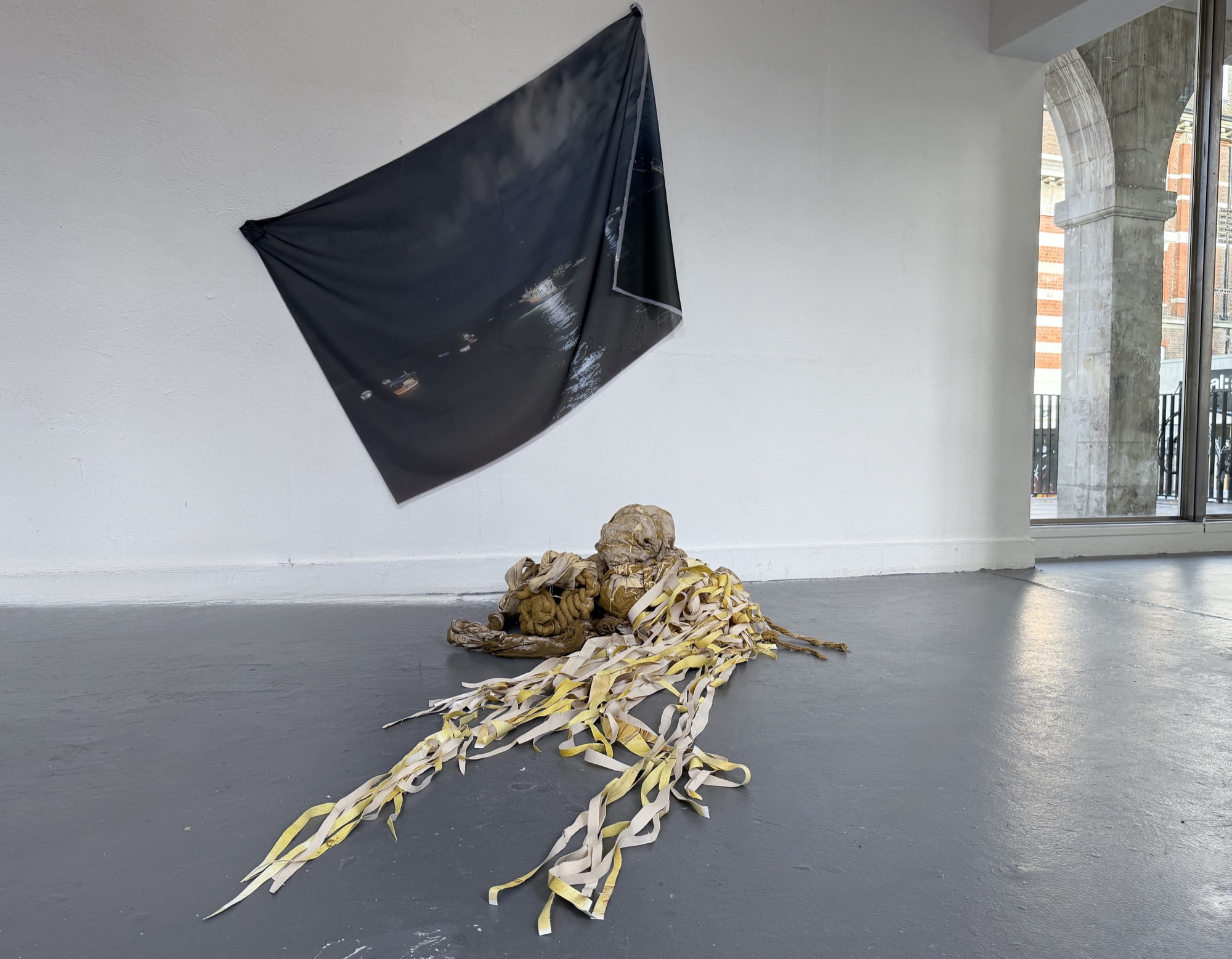
An installation of three human-scale figures made from salvaged sailcloth, fishing nets, handmade rope, and salt-treated and indigo-dyed cotton and silk, held together and upright by steel armatures. The structural armatures are made visible as part of the work. A mooring cleat and rope support one figure, keeping it from falling. The postures range from standing upright, to leaning and crawling, and the surfaces carry evidence of material processes: degraded fibres, accumulation marks, and salt erosion and crust.
The figures occupy the space as bodies. Their exposed armatures reveal the effort required of maintaining their positions, and they sink into their postures over time. The work asks what recalibration, adjustment, translation and absorbing of friction happens for stability to remain possible. These figures are not heroic or triumphant. They are doing what must be done to remain standing, by what means they have available.
The decision to expose rather than conceal the support structure came partly from research into museum conservation mounts, where objects from one context are held upright in another by infrastructure that is usually invisible. These figures invert that logic.
The research running alongside this work draws on Silvia Federici's analysis of reproductive labour, Lauren Berlant's writing on the psychological cost of attachment to capitalist systems, and Sara Ahmed's work around the social cost of naming invisible labour. These frameworks inform the work under the framing of the body as infrastructure.
The title came from how the work would be naturally described out loud. Plain speech as a form of resistance to institutional language.
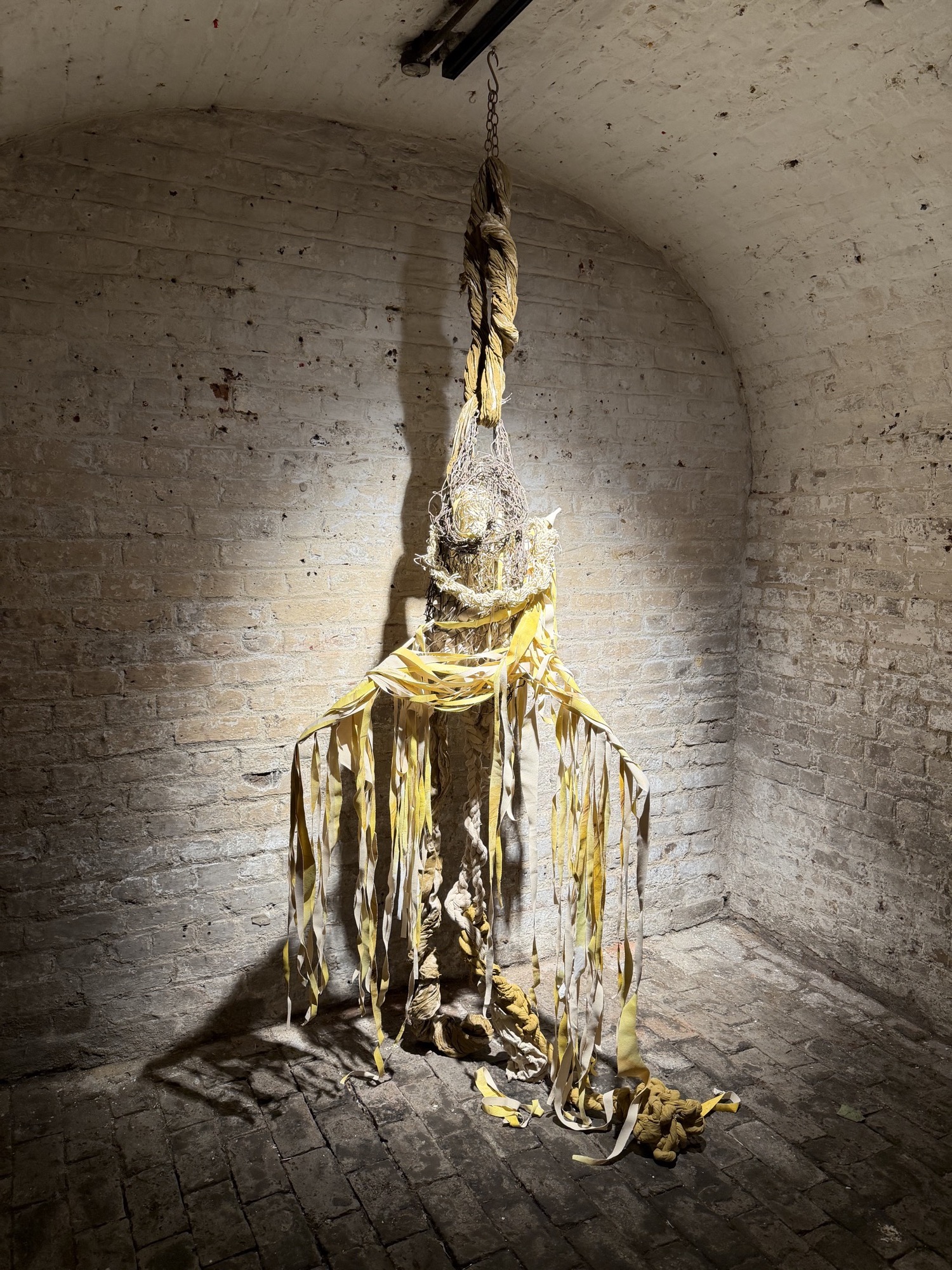 Installation view · 2025
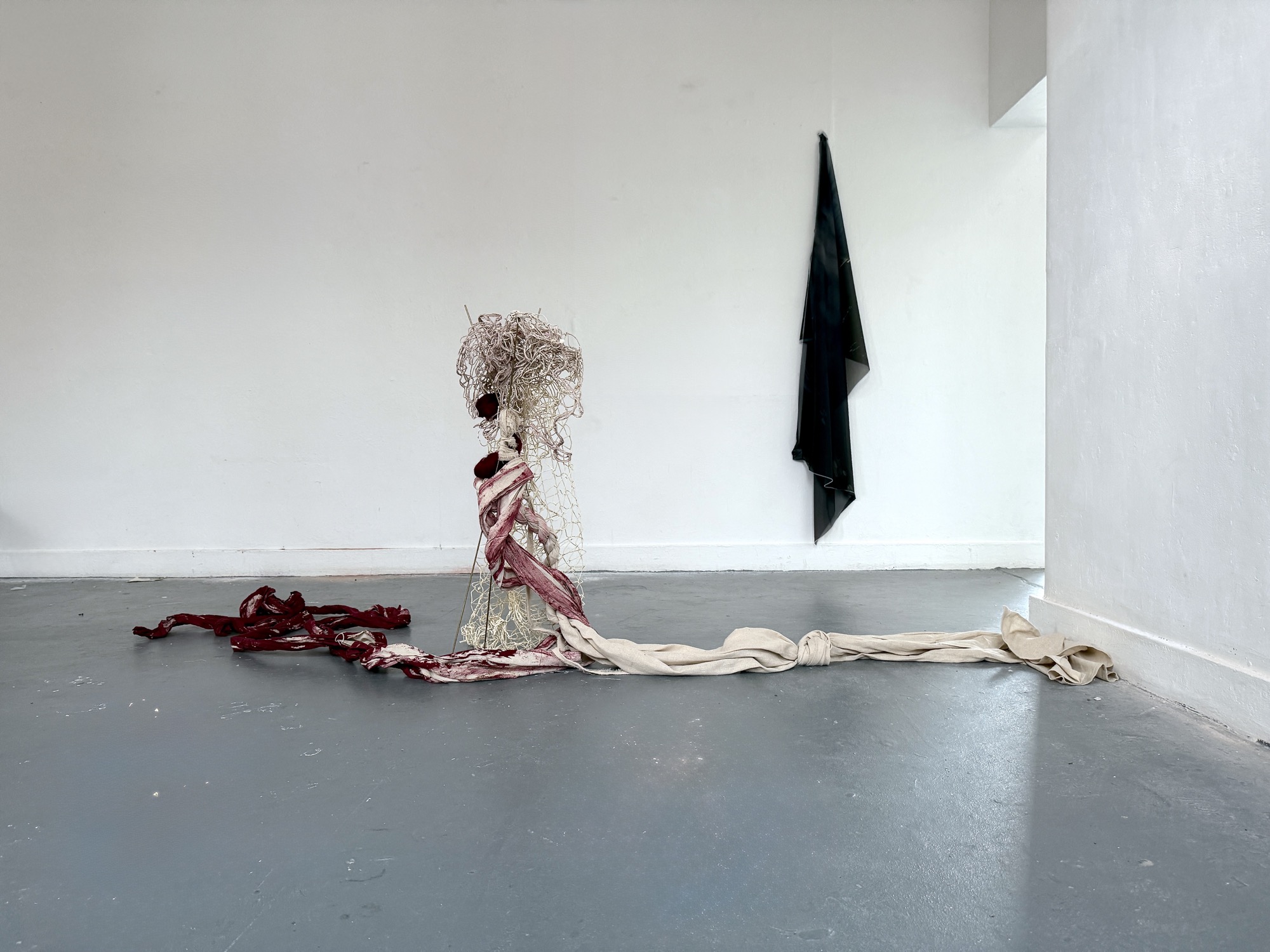 Installation view · 2025
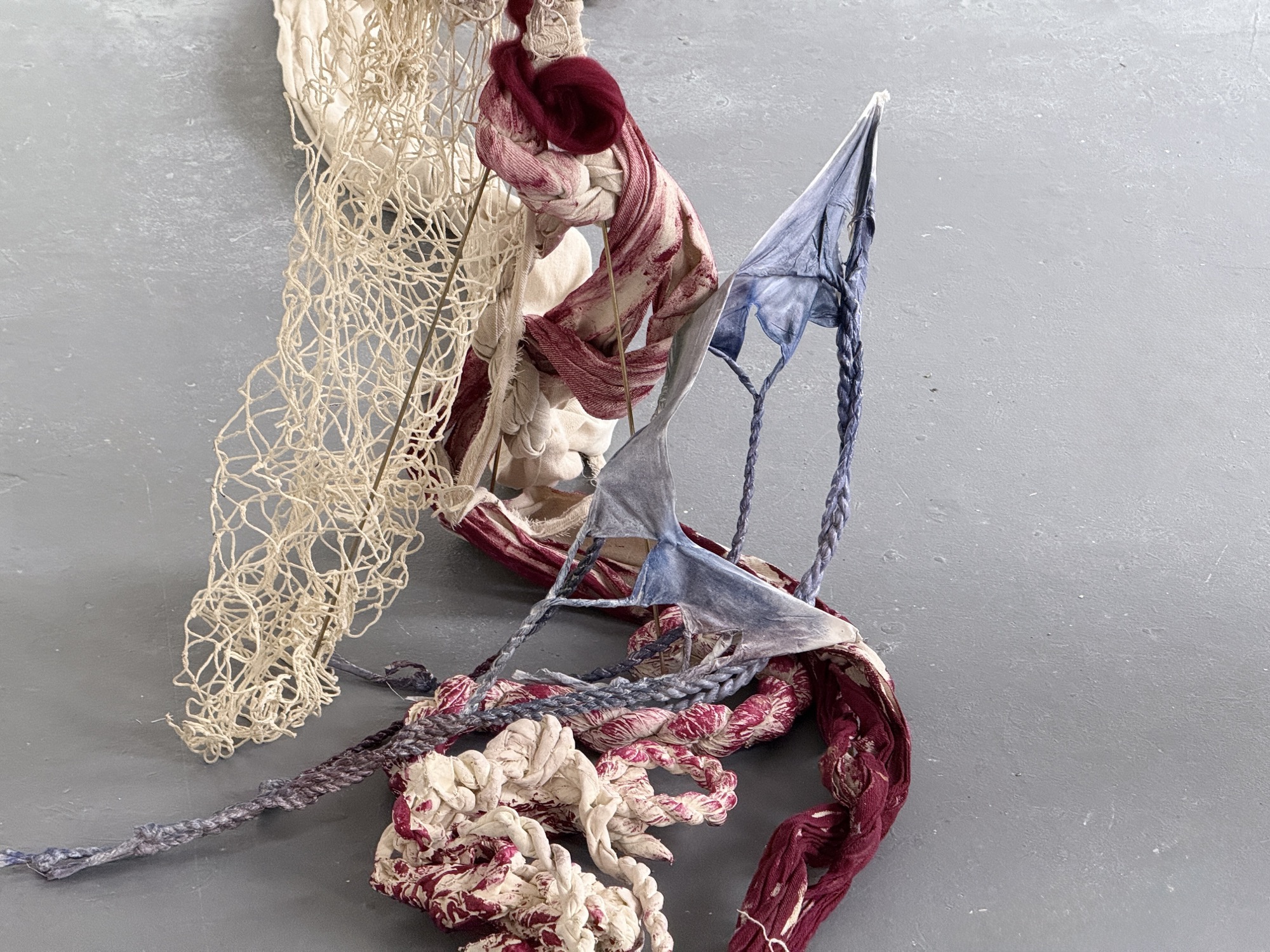
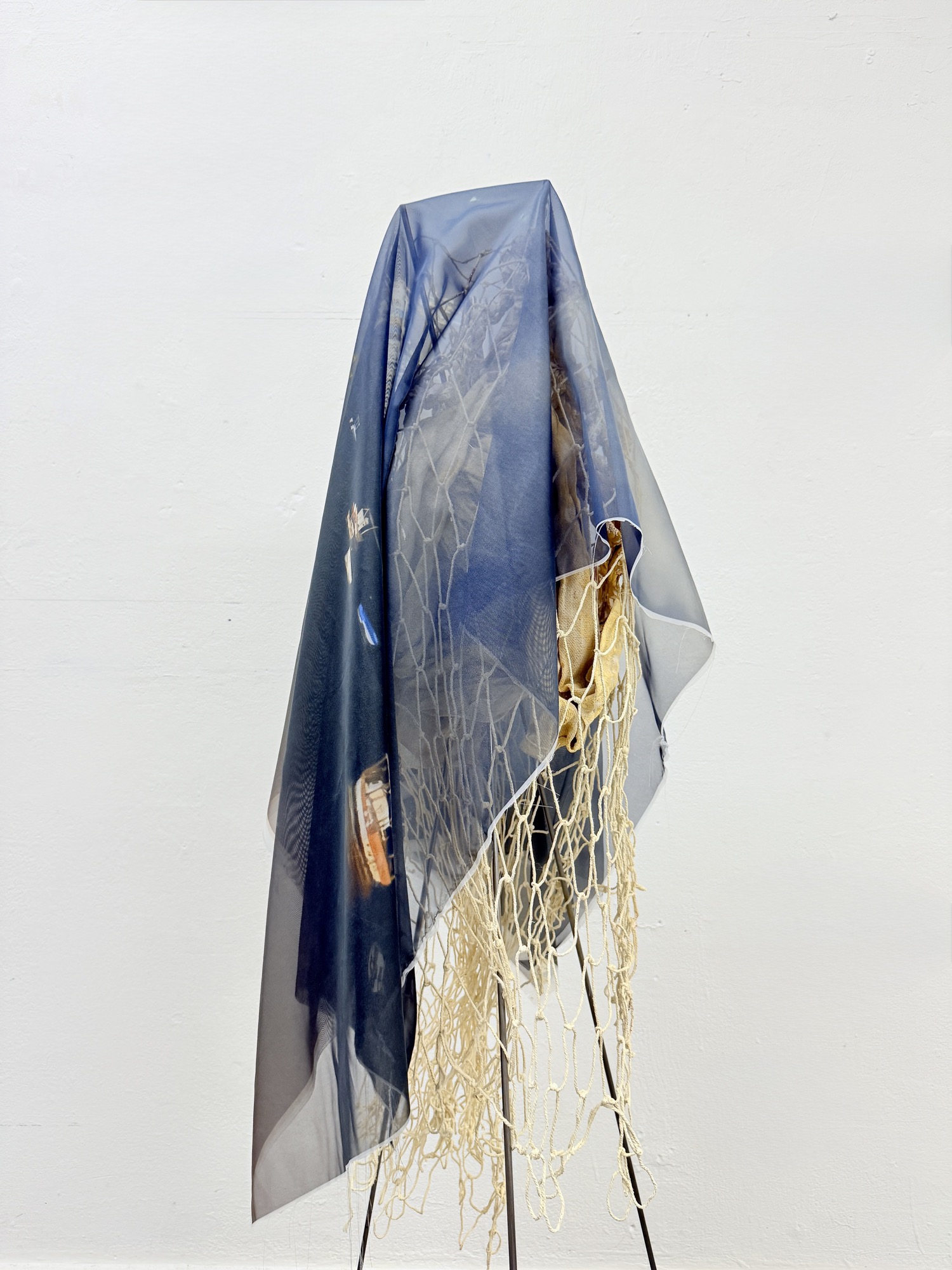
The Tidal Bodies series comes out of an earlier way of thinking about the Atlantic, as a space of hybrid identity, in-between, belonging to no place fully. It sits in this practice as a building block rather than a conclusion, the point the work moved through on its way to treating the Atlantic as method rather than subject.
Salvaged net and canvas carry use that predates the work. A brass hook takes the weight instead of a mooring cleat, a body pulled into position rather than tethered to one. Tidal names what the later work returns to and sharpens: not a single crossing, but a body remade by repeated pull and release.
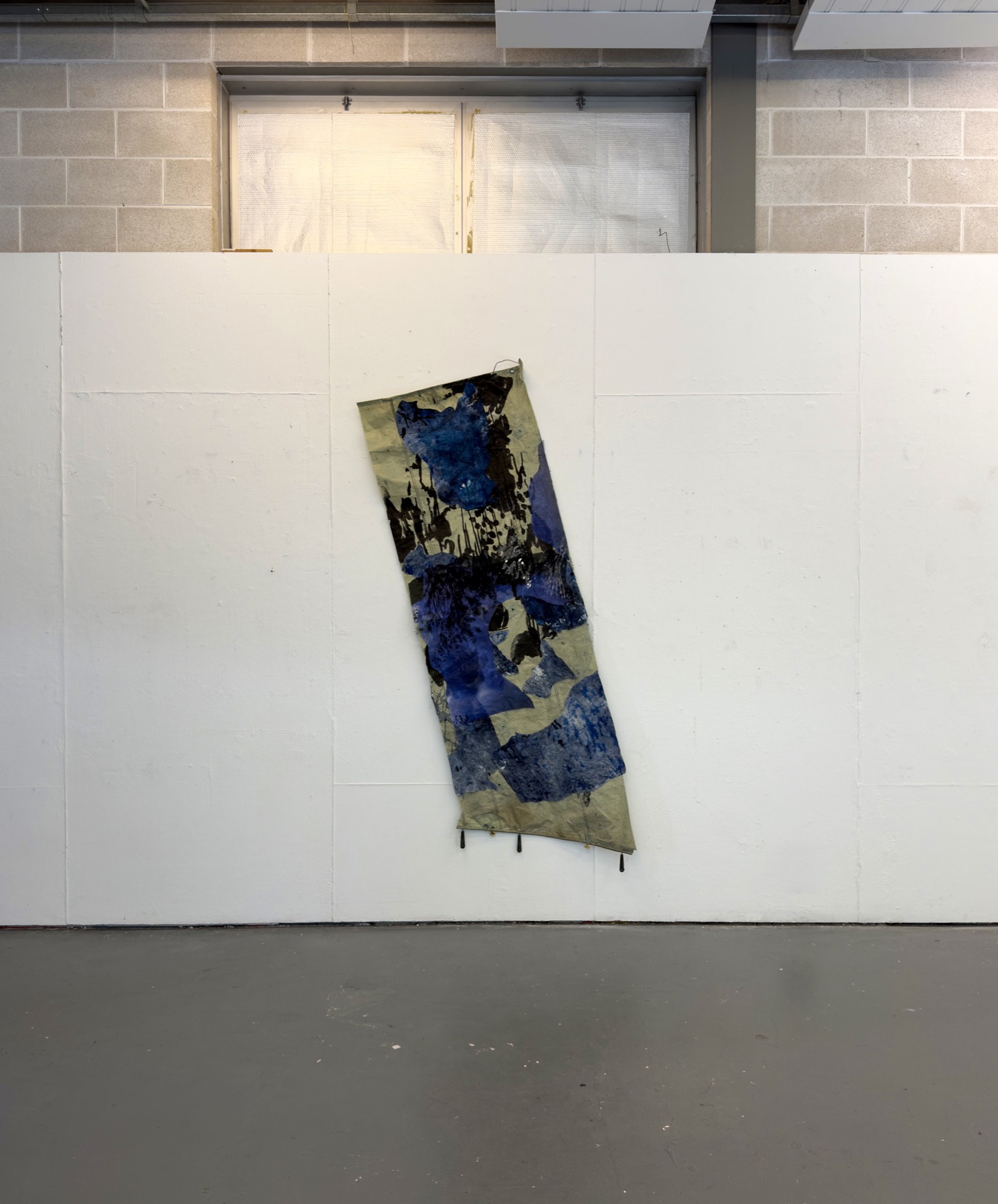
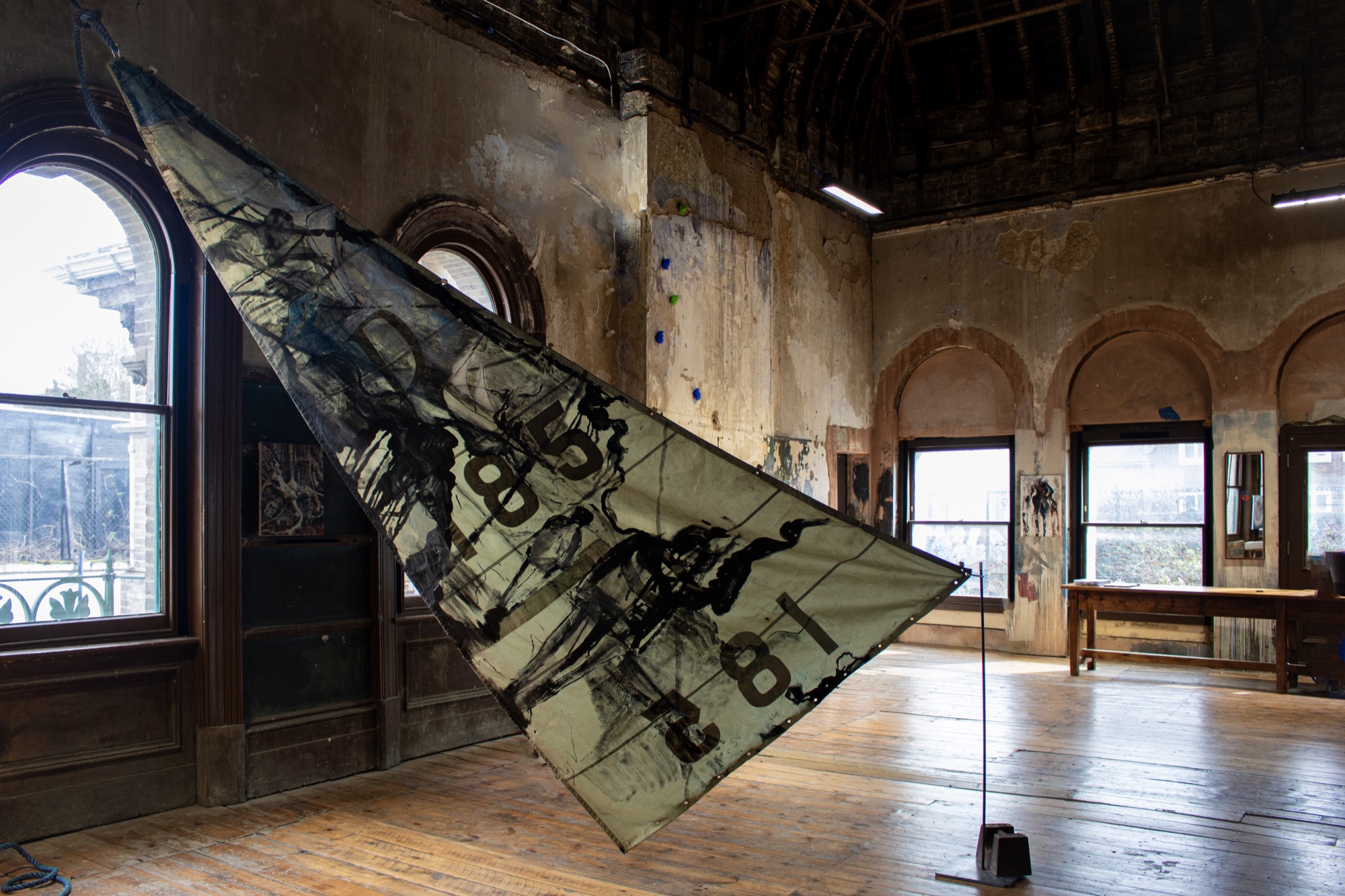
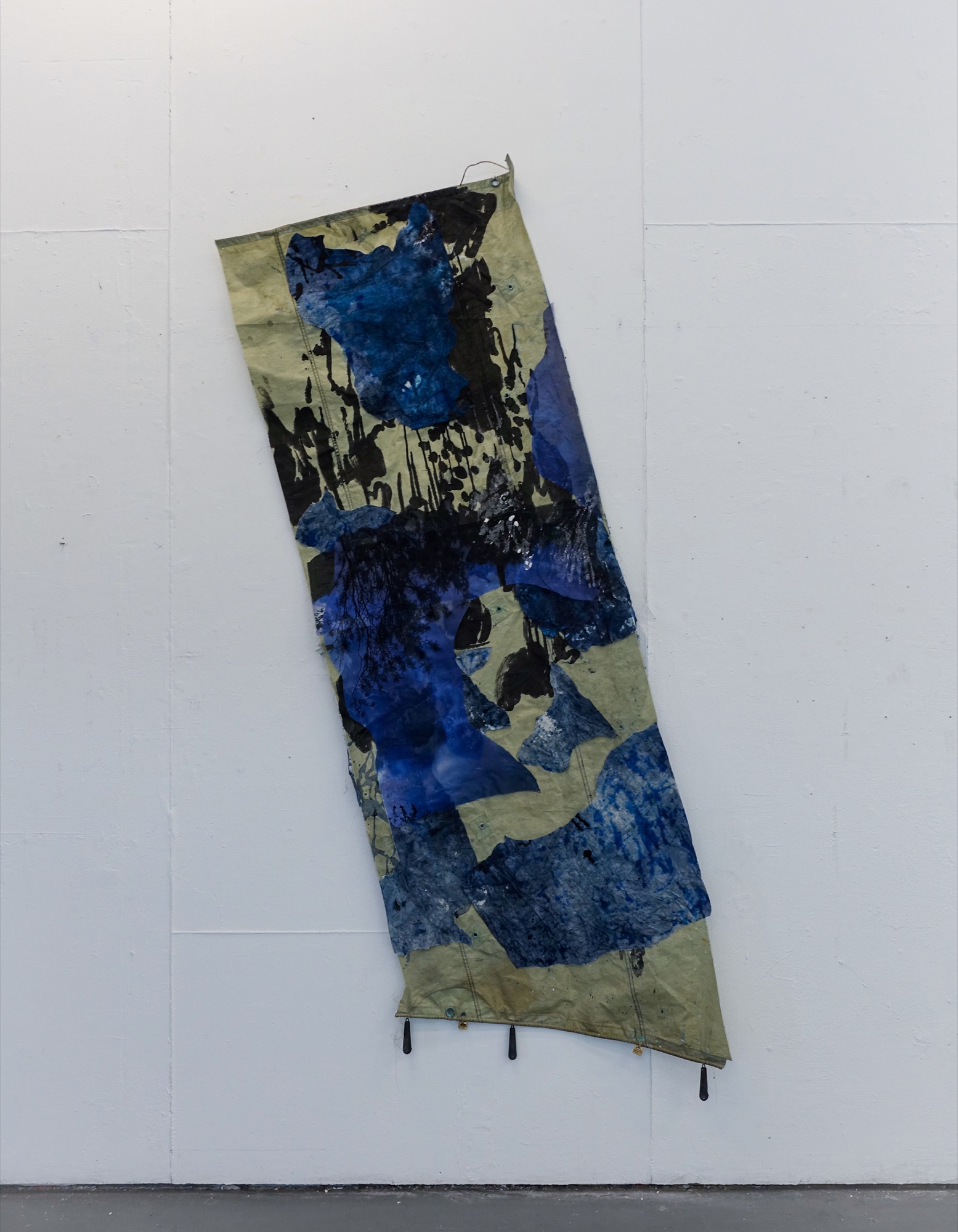
Flag of Distance attempts the impossible: a claiming of what cannot be claimed, an identity that belongs to distance itself. No nation. An anti-nation. Belonging to the separation of things.
The iron bomb weights, used in fishing for extraction, pull the sail into its diagonal. It cannot stand upright on its own. It holds its position only through the force acting on it. In this it mirrors Still Looking Across the Same Impossible Thing, which also cannot hold its form without the tension that shapes it.
The flag is hopeful. It insists on its claim the way "we stood and claimed the moon" insists on its own. In Lauren Berlant's terms, this is cruel optimism: an attachment held despite knowing what it cannot deliver. To plant a flag in distance itself inverts nationhood, refuses the logic of borders, and insists on belonging to something that is always moving, always between.
Jan Verwoert's account of Bas Jan Ader's In Search of the Miraculous is relevant here. In this three-part work, Ader crossed the Atlantic alone by one-man yacht and disappeared. Verwoert describes the crossing as an experience of what lies beyond normal life and, simultaneously, a form of homecoming. That idea, of the impossible crossing as a search for home, runs through this practice. What connects the work most directly is the treatment of impossibility as the condition the work inhabits. In Ader's case that impossibility was discovered. Here it is chosen from the outset.
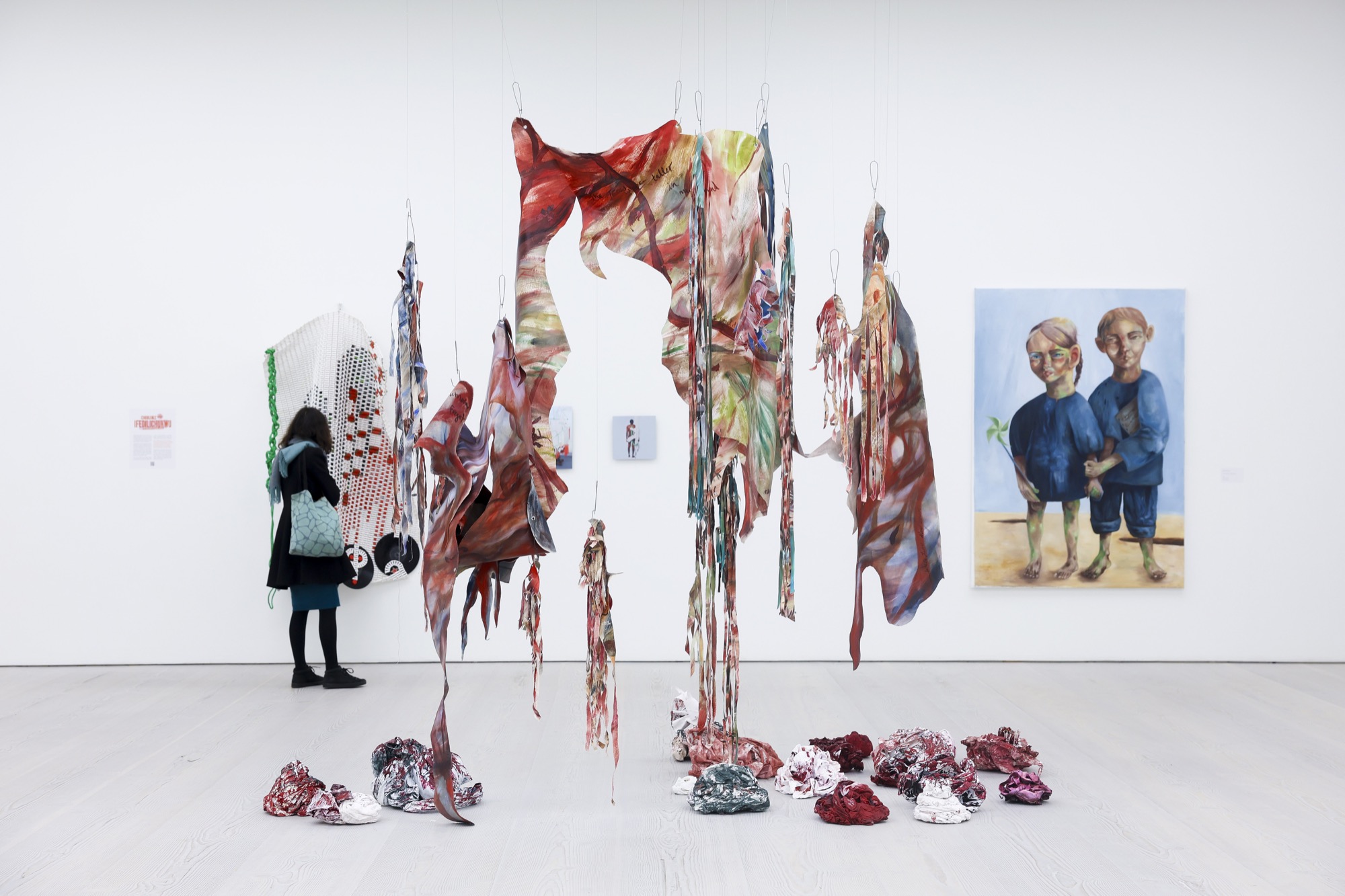
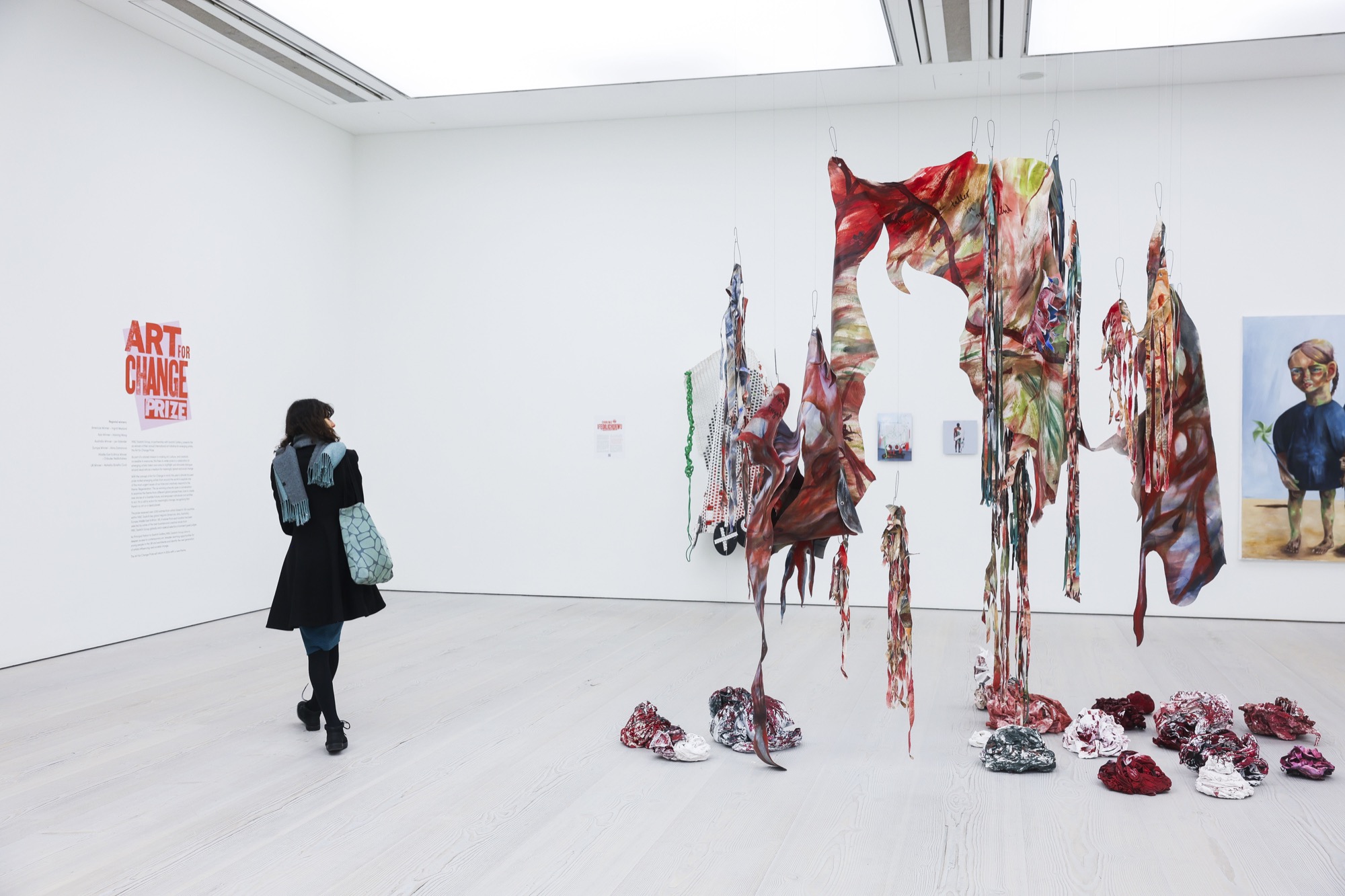
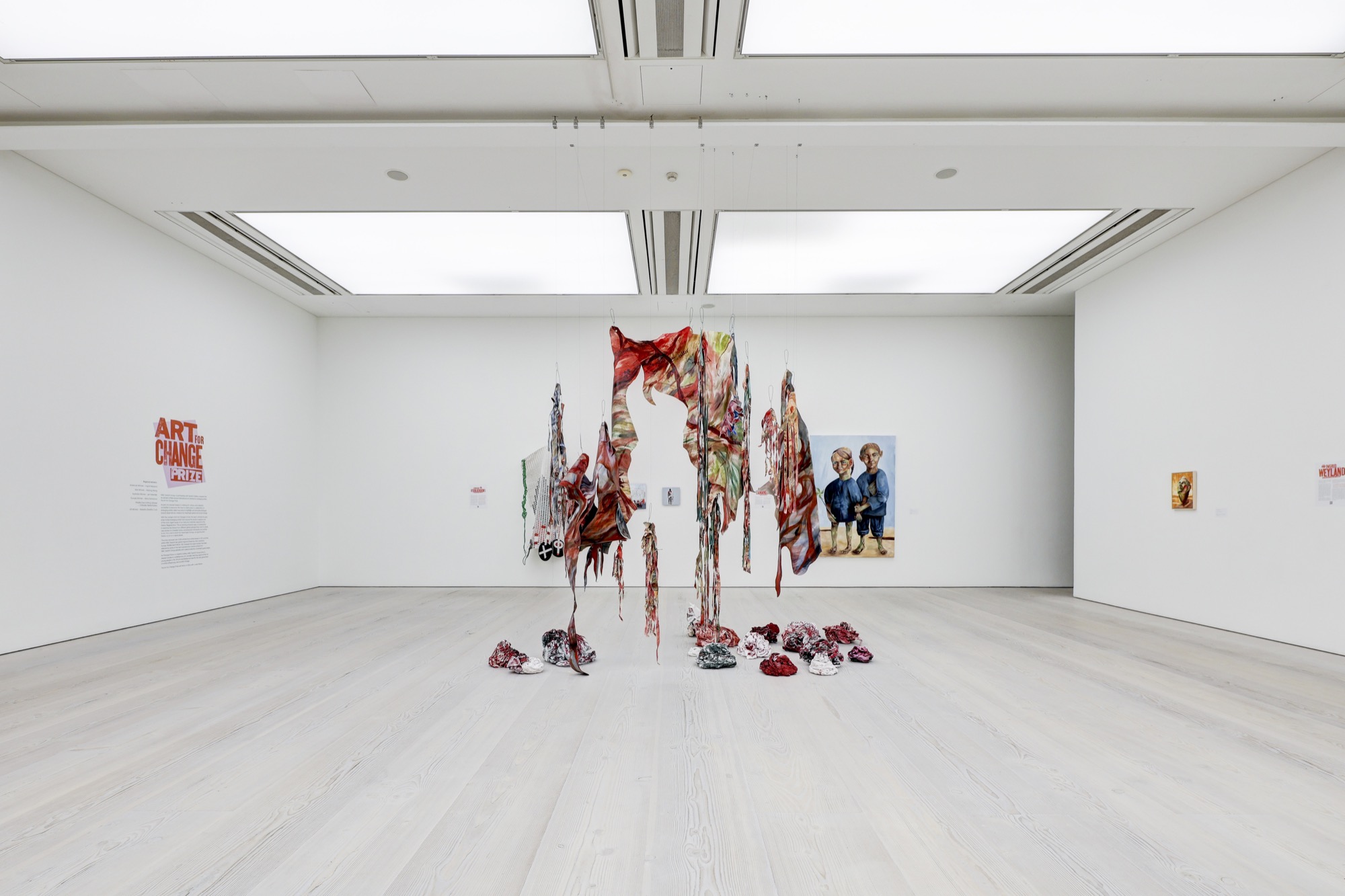
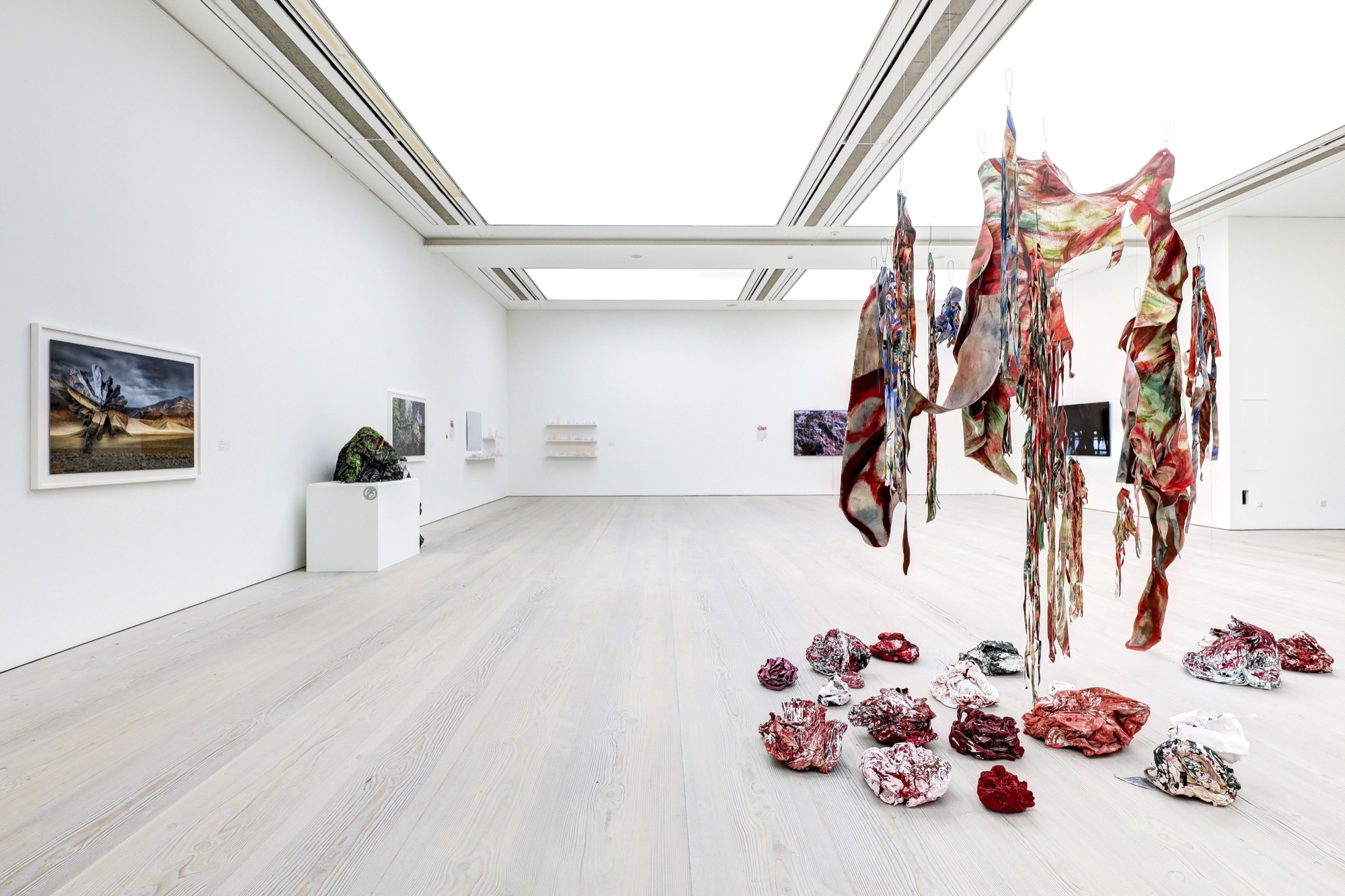
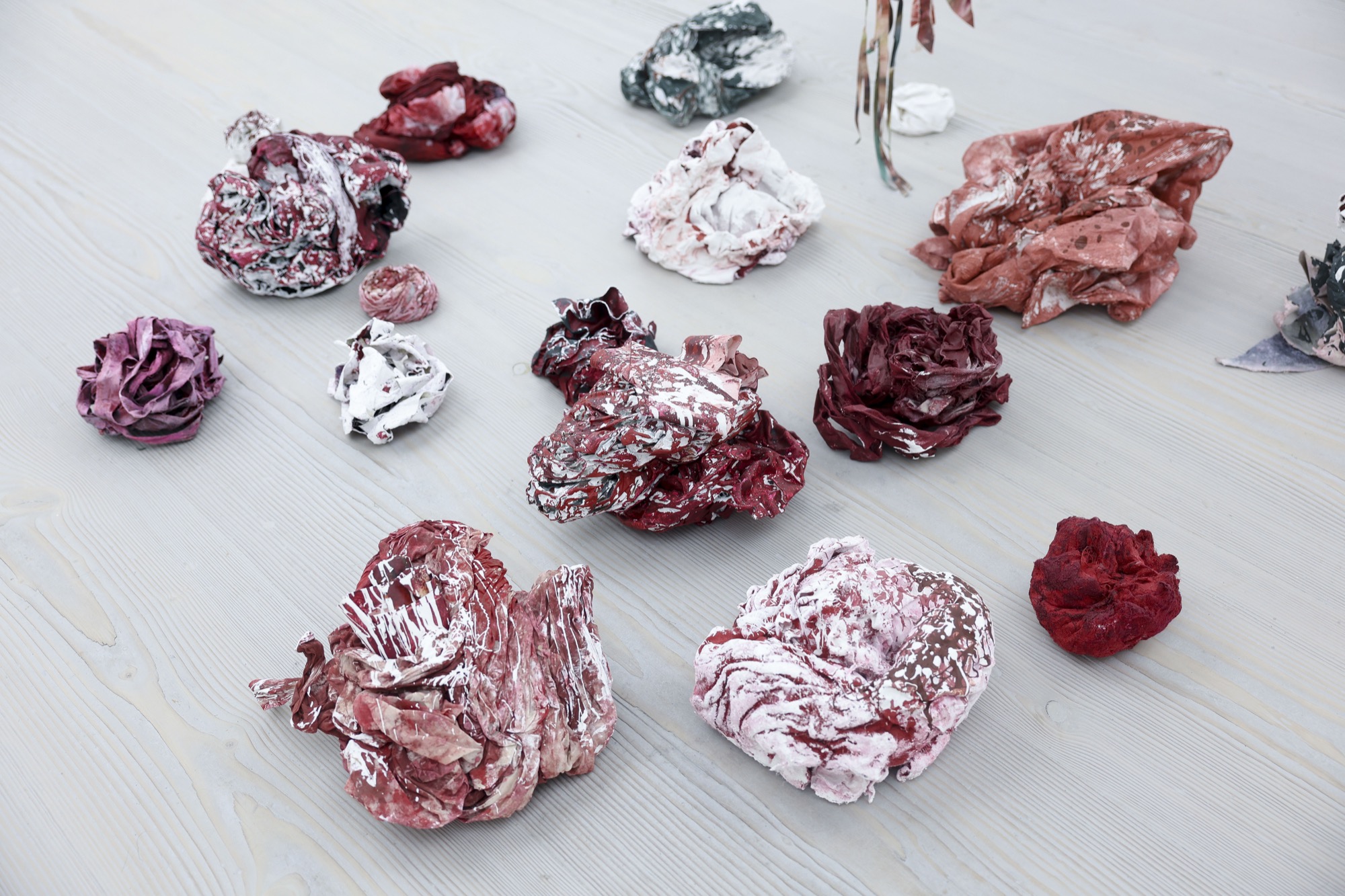
Torn oil paintings, dead-stock fabric and digital print, suspended on metal hooks and gathered across the floor. The work refuses the rectangle and the wall, asking to be walked through and touched.
Red runs through it, the colour of the body. The suspended forms carry the weight of water rising, of fishing grounds emptied past their capacity to recover. What gathers on the floor is more fragile, the residue of something that has already lived and is now only its own remainder.
A poem is worked into the paint throughout, in fragments, thinking about places and people that won't remain. We stood and claimed the moon, the same impossible claim as always: not to possess something, but to stop time itself, if only in the saying of it. The line reappears three years later, on the back of Still Looking Across the Same Impossible Thing, still reaching for the same impossible thing.
Shown as part of Art For Change at Saatchi Gallery, 2023, under that year's theme of regeneration.
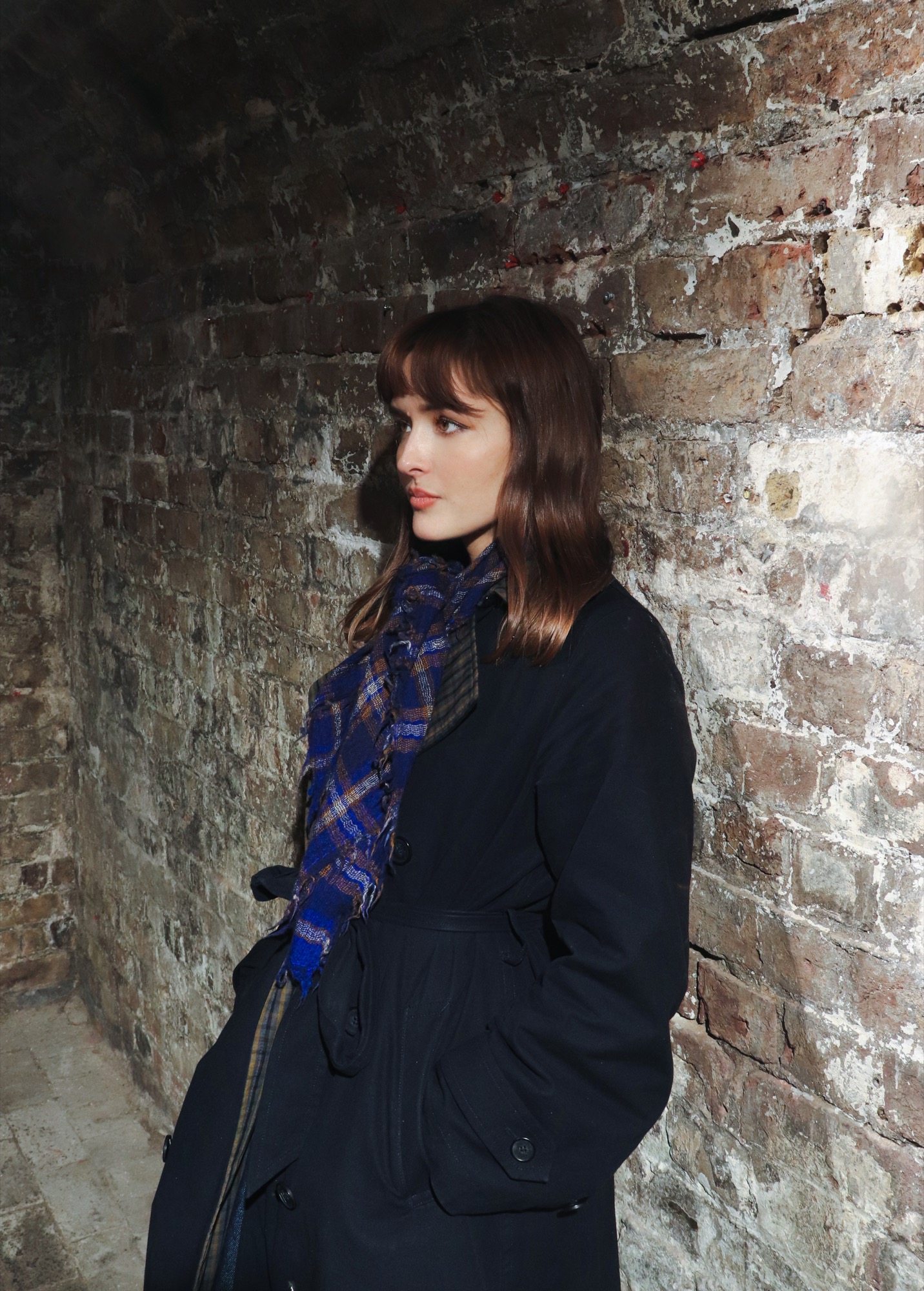
Natasha Botelho Cook is a Brazilian American dual national who lives and works in London. She has a relationship to distance. She tries to claim it as a place of belonging: the in-between, the non-nation, even though this kind of belonging is impossible.
She makes sculptural work that evidences the ongoing cost of recalibration: adjusting to environments, holding shape under pressure. The materials she uses have their own histories. Oceanic forces are methodology. She tests conditions like erosion, staining, tension, and drift on the materials she works with. The bodies she makes show the effort required to maintain themselves. She uses writing to make sense of her own experience in relation to this.
Resistance and precarity are equal forces. The Atlantic finds its way into the work even when she tries to keep it out. She uses myth and inherited stories from the places she has lived as a source of form and meaning, as a way of approaching what she does not fully understand: the ocean, the horizon, love, distance.
She is forever fixated on impossibilities. She has hope.
Currently completing an MA in Fine Art at Chelsea College of Arts, UAL. BA Fine Art at Central Saint Martins, first-class honours. Co-founder of et al. Collective.